Renting a motorbike or car is the best, and sometimes the only, way to truly experience Koh Samui. You have complete freedom of movement: from the bustling beaches of Chaweng to the secluded waterfalls in the center of the island. But any vehicle requires fuel, and refueling in Thailand has its own unique flavor. There are three main ways to refuel your vehicle on Koh Samui. Below, we'll cover each in detail so you don't end up empty-handed in the middle of the jungle. We'll tell you what gas stations are available on Koh Samui, how much gas costs, how refueling works, and what to look out for.
How to refuel a car on Koh Samui
Gas stations in Thailand look no different from those anywhere else in the world. But unlike in European countries, you don't have to fill up your car yourself. Petrol stations are staffed by staff who will do the rest. You don't even have to get out of your car.
Your actions:
- You drive up to the free column
- Waiting for an employee
- Open the window and tell him:
* fuel type;
* the amount you want to fill up with, or a full tank.
Then pay in cash, QR code (if you have a Thai bank) or bank card.
Don't leave your car until the process is complete, otherwise others will have to wait for you. Stations have dedicated parking areas where you can leave your vehicle and go to the store or restroom without disturbing anyone else.
What gas stations are there on Koh Samui?
There are several large chains operating on the island:
* PTT
* Bangchak
* Shell
* Susco
* PT
Besides these, there are also private petrol stations owned by individual businessmen. Gasoline there is always a few baht higher per liter, and there is no guarantee of the quality of the fuel.
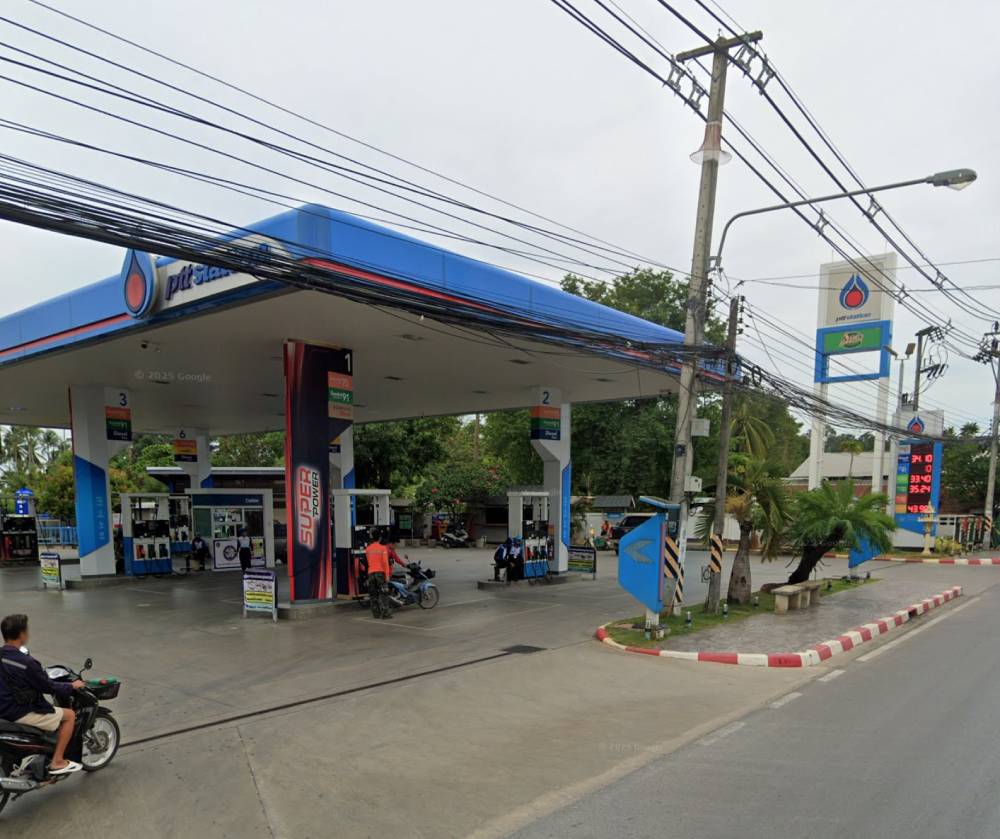
All major gas stations are located along the main ring road and are easy to find no matter where you're staying on the island. You can always find their locations on Google Maps by searching for "gas (gasoline) stations" or "petrol stations."
Advantages : prices are fixed, state-controlled, and the same for everyone. Furthermore, chain gas stations offer excellent rest areas. Clean, free restrooms are always available at any station, regardless of brand. Larger stations also have minimarts, ATMs, and coffee shops. For example, the PTT chain has an exclusive partnership with 7Eleven and an Amazon coffee shop, which are located at every station. You won't find these at other gas stations.
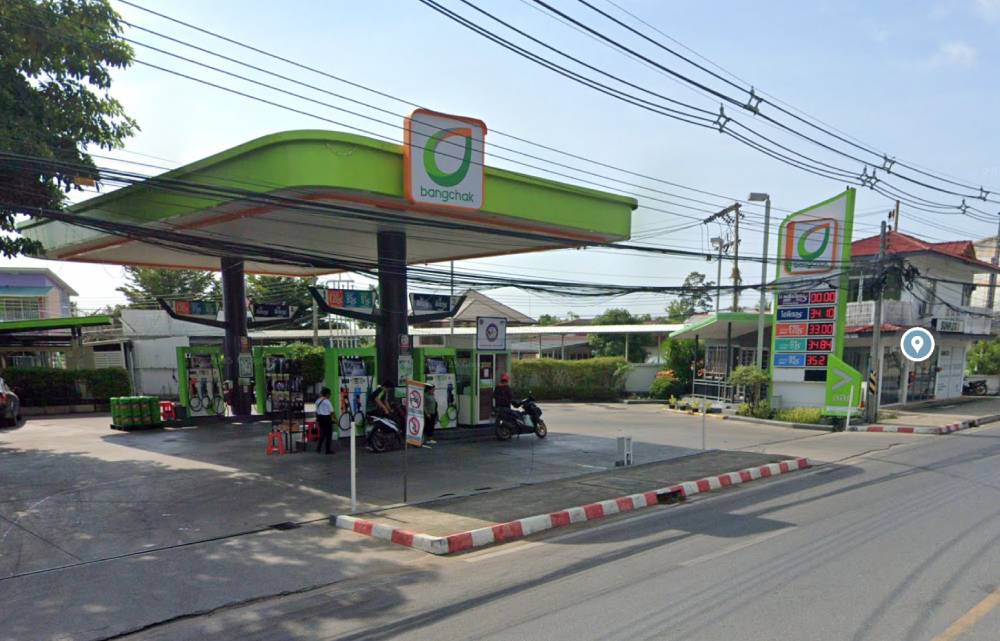
Working hours: On Koh Samui, as throughout Thailand, very few gas stations are open 24 hours. Most typically open between 5- 6 in the morning and close between 9-10 in the evening. Hours can also be found on Google maps.
Gasoline in bottles
In addition to full-fledged gas stations, the island also offers a backup option, so to speak, in case your tank runs dry and the nearest gas station is far away. While driving around Koh Samui, you'll likely see bottles of red or green liquid on display outside small private shops. This is also gasoline. These are primarily designed for scooters that need a quick top-up of a few liters, but they're also suitable for cars in an emergency.
It is best to use it only in the most extreme cases, since the quality of gasoline leaves much to be desired, and the cost is higher than at gas stations, and the bottle only holds 0.7 liters.
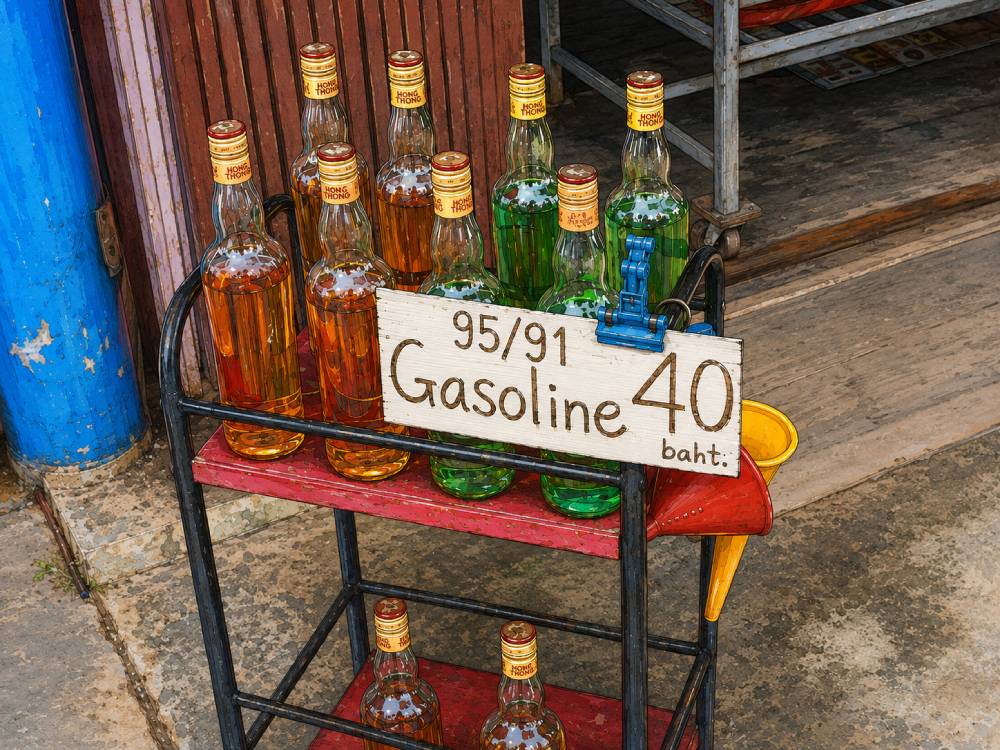
If you drive a car, always monitor the sensor, as if you fill up with low-quality fuel, it can damage the engine, and you will be financially responsible for its repair.
Self-service vending machines
If you're off the main road or driving late at night, small automatic gas pumps are a lifesaver. They usually look like red, orange, or silver boxes with a hose, parked right by the side of the road in villages or near small shops.
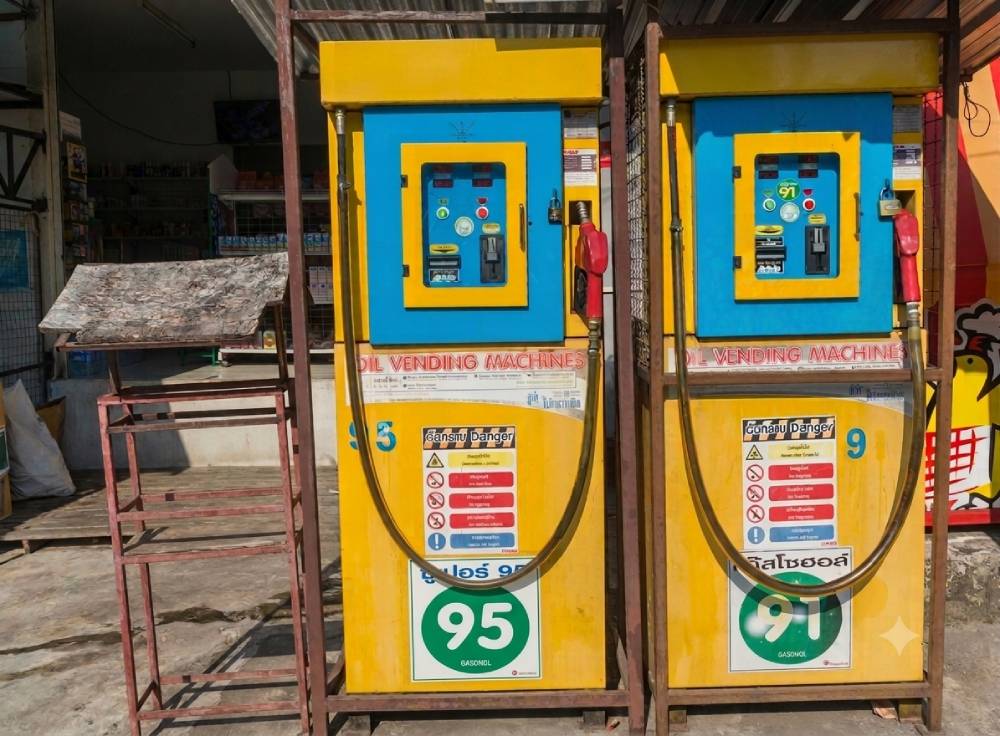
How it works: You select the desired type, insert bills (usually 20, 50, and 100 baht) or coins into the bill acceptor, pick up the nozzle, insert it into the tank, and press start. The machine will dispense gas exactly for the amount you inserted.
Advantages: Operates 24/7. Ideal for emergency refueling.
Disadvantages: The price per liter is 15-20% higher than at official gas stations. The machines don't give change. And you don't know the quality of the fuel you're getting, just like when you fill up with bottled gasoline.
What kind of gasoline should I use in a rental car?
There are several types of fuel available in Thailand: Gasohol 91, Gasohol 95, E20, E85, Diesel, and Gasoline 95. For more information, see a separate article on the website. All city cars run on Gasohol 91, Gasohol 95, or E20. 91 and 95 are most common. Some SUVs and MPVs can run on diesel. Always confirm the correct fuel type when picking up your vehicle. This information is usually included in the contract and on the inside of the fuel filler flap.
Never put diesel fuel into a gasoline car, or vice versa. If you make a mistake with the fuel, do not start the engine and contact the rental company immediately.
How much does gasoline cost in Koh Samui?
Fuel prices in Thailand fluctuate regularly in line with global oil prices. On Koh Samui, the price is always 1.5 baht per liter higher than on the mainland, due to logistical difficulties, as there is no bridge between the island and the mainland, and the cost of ferry transportation is factored into the fuel price.
At the time of writing (July 2026) price per liter:
* Gasohol 91 38.3 baht
* Gasohol 95 38.8 baht;
* Diesel 37-38 baht.
The price is the same at all chain gas stations, except for Shell: there it is usually several satangs higher.
Should I leave a tip?
As with any service, tipping is entirely optional, not mandatory. If you're happy with the service, you can thank the employee by tipping them 20 baht. Cash, of course.
Do I need to return a rental car with a full tank?
It depends on the rental terms. Most companies delivery the car with a full tank and require you to return it with the same fuel level, or pay cash. Others operate on a "return with the same level of fuel as when you picked it up" principle. Be careful here, as there is no refund for overfilling. This should be clarified in advance to avoid additional charges upon return, and the fuel level should be noted in the contract. It's a good idea to take a photo of the fuel gauge upon pickup.
Key findings
- Cash is king in Thailand. You can pay by card at major gas stations, but there's often a minimum limit (for example, 300 baht) or the terminal may be temporarily out of order, so always carry cash.
- The magic word is "Full." If you want to fill up to the brim, just tell the staff "Full" and the gas type. They'll fill your tank and tell you the amount to pay (it'll also be displayed on the pump display).
- Keep an eye on the fuel gauge. Koh Samui has mountainous sections (especially the roads through the center of the island, for example from Lamai to Maenam). Fuel consumption increases significantly on climbs. Don't drive into the mountains if you have less than half a tank.
- Tipping is optional. Tipping gas station attendants is not customary, but leaving them 10-20 baht is likely to be appreciated.
- Try to refuel only at large chain gas stations
- Find out what type of fuel to fill when picking up your vehicle and the conditions for returning it.
- Always check what the employee is putting in: look at the nozzle and the pump screen. They might not hear you, make a mistake, and end up paying for the broken car.
- Before a long trip, fill up your tank and check for large gas stations along your route.