
If you're planning a vacation or already arrived on Koh Samui, sooner or later you'll face the issue of getting around the island. There's no public transportation, taxis are very expensive, the distances between districts are considerable, and walking in the heat is not ideal. The only option is to rent a vehicle. A scooter or a car. Sure, a motorbike gives you an island vibe and the wind in your hair, but when a tropical downpour hits, you need to buy groceries for the week, or you're traveling with children, this transportation option becomes completely unsuitable. It's completely unsafe, especially if you've never driven one before and don't have the required Category A driver's license- your insurance won't work. For comfortable and safe travel, a car is an ideal option. But which car is best to rent? Many people think an SUV is a must on the island, but Koh Samui dictates its own rules: there's a smooth ring road, very narrow streets, and steep mountain climbs with breathtaking inclines. However, the main roads are well paved, just like in the city.
Let's figure out which car is best for Koh Samui, when it's best to choose a compact car, when you really need an SUV, and which option is ideal for your plans.
What are the roads like on Koh Samui?
Before renting a car on Koh Samui, it's helpful to understand the local roads. There is one main ring road with good asphalt and smooth surfaces on the island. Almost all popular tourist routes run along it. A regular city car can easily reach:
Chaweng;
Lamai;
Boput;
Maenam;
Naton;
Fisherman's Village;
Big Buddha Temple;
most beaches;
waterfalls;
viewpoints.
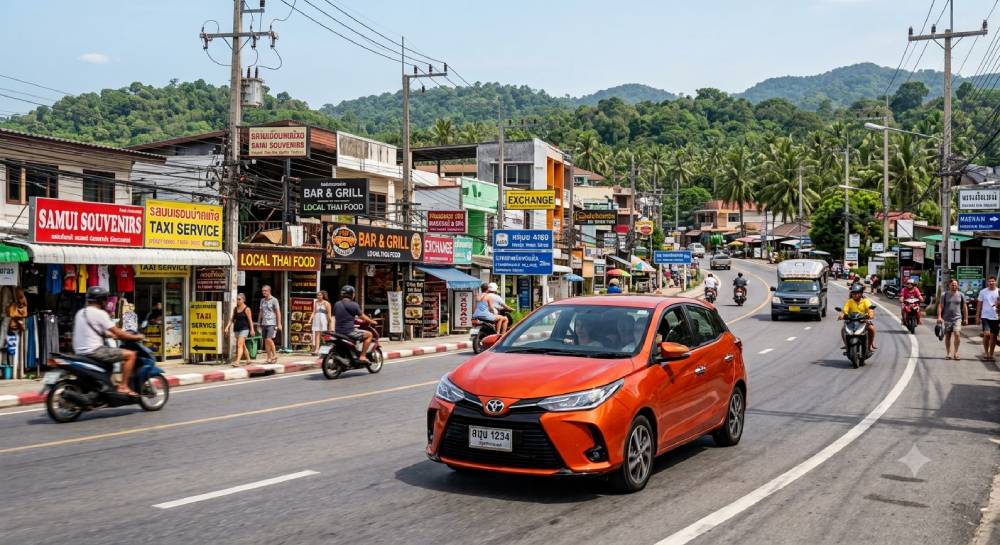
Popular models:
* Toyota Yaris;
* Toyota Ativ;
* Honda City;
* Mazda 2;
* Toyota Vios;
* Nissan Almera.
This is the most popular and budget class of car on the island.
Suitable for: Daily trips along the ring road, shopping in the Central shopping center, trips to the beaches.
Pros: They're maneuverable and compact, which is crucial for Samui's narrow streets. They make it much easier to find parking in busy areas like Chaweng or Lamai. They're also economical and inexpensive to rent.
Cons: Most of these cars have a 1.2-liter engine (so-called Eco-cars). They're ideal for everyday driving on smooth roads, but most tourists prefer more powerful engines.
Do i need an SUV crossover?
If you're traveling with a large group, have a lot of suitcases, or simply like a high seating position, you might want to consider a crossover.
It will be more convenient:
* on broken sections of the road;
* during heavy rains;
* if you plan to frequently drive in hilly areas.
Popular models:
* Honda HR-V;
* Toyota Corolla Cross;
* Totoya Yaris Cross;
* Nissan Kicks;
* Mazda CX 30;
* MG ZS.
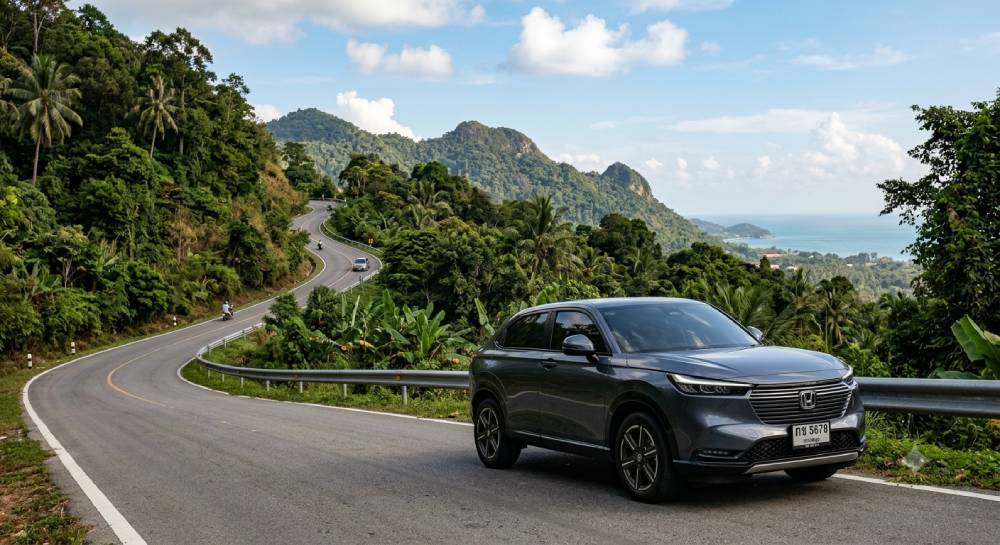
They're slightly more expensive than sedans. If your budget allows, they're probably the golden mean and the best compromise for a comfortable vacation on Koh Samui.
Best for: Families with children, island explorers, and those living in the low elevations.
Pros: Increased ground clearance. On Koh Samui, this saves you from the huge speed bumps and deep puddles that quickly form during tropical downpours. They have more powerful engines (usually 1.5 - 1.8 liters), so they handle smaller mountain roads with ease.
Cons: They're wider and longer than compact cars. Passing oncoming traffic on narrow concrete roads and finding parking will be a bit more challenging.
Do i need an SUV on Koh Samui?
A proper 4WD isn't necessary for everyone. There are several viewpoints, restaurants, and cafes in the center of the island, accessible by very steep climbs. For example, some panoramic cafes are located on steeply incline roads. If you plan to visit such places frequently, a crossover or a car with a more powerful engine will indeed be more comfortable. For example, a Toyota Vios sedan with a 1.5-liter engine will be quite sufficient. But if your goal is beaches, markets, cafes, and the main attractions, accessible by direct highway, there's no point in overpaying for an SUV. For such a day trip, you can additionally rent a 4x4 jeep, such as a Wrangler, which is specifically designed for off-roading and mountain serpentines.
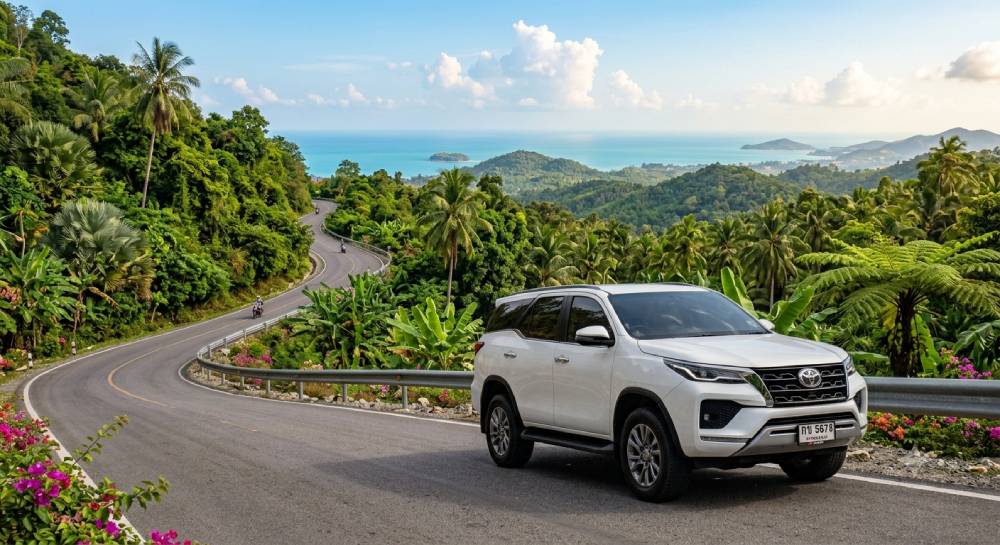
Popular models:
* Toyota Fortuner;
* Mitsubishi Pajero Sport;
* Ford Everest.
Suitable for: If your villa or hotel is located at the very top of a mountain with a road slope of 30 degrees, if you plan to drive through the mountains frequently.
Pros: Indestructible suspension, powerful diesel engines, and all-wheel drive (4x4). Plus, they make you feel incredibly safe on local roads.
Cons: Parking becomes a quest. Large cars are difficult to park at a 7-Eleven or the beach, and turning around in a dead-end street is a real challenge.
Which car to choose for a family or a large group?
Sedans and hatchbacks are suitable for families of up to five. However, choose models with engines of 1.5 liters or higher, such as the Toyota Vios, Honda Jazz, Mazda 2, and the new turbocharged 1.0-liter Honda City and Nissan Almera models (they easily produce the same power).
A crossover would also be a good choice - the interior is more spacious.
For more people or a lot of luggage, consider a minivan or an SUV. They can accommodate up to seven people. This will allow everyone to travel comfortably without having to stack suitcases on each other's laps.
Is it worth taking the cheapest car?
This isn't always the best choice. Sometimes the price difference between a budget car and a higher-class vehicle is only a few hundred baht over the entire rental period.
In this case you get:
more powerful engine;
spacious interior;
spacious trunk;
best comfort on long trips.
However, a sedan may be newer and more fully equipped. The choice here depends on your preferences and rental goals. If you plan to actively explore the island, including mountainous terrain and off-roading, the extra cost for a higher class is often entirely justified.
3 important tips
1. Consider the location of your home. This is the most important rule. If your home is on the ring road or a few hundred meters away on flat ground, get a small Toyota Yaris- it'll be more than enough. If the driveway to your home is a steep concrete incline, look for a car with a 1.5-liter engine or larger.
2. Insurance is a must. Traffic on Koh Samui is chaotic, with motorbikes scurrying everywhere. Be sure to buy a car with First Class Insurance to avoid ruining your vacation or wintering.
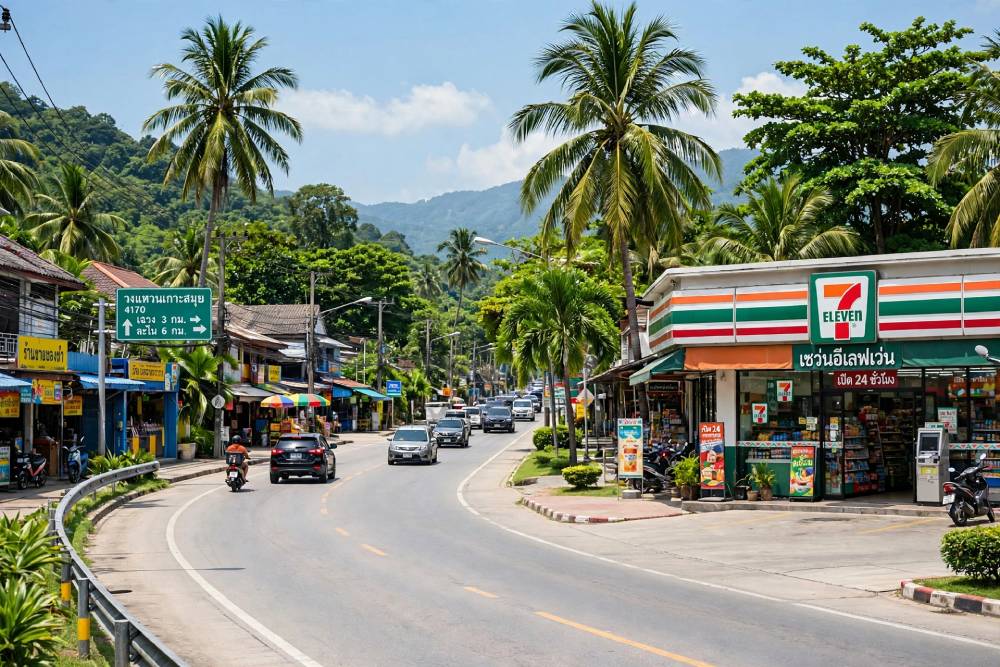
3. Be careful with your dimensions. The roads on the island are narrower than they appear. There are often no shoulders at all (deep storm drains immediately follow). If you're new to driving right-hand drive on the left side of the road, start with a smaller car.
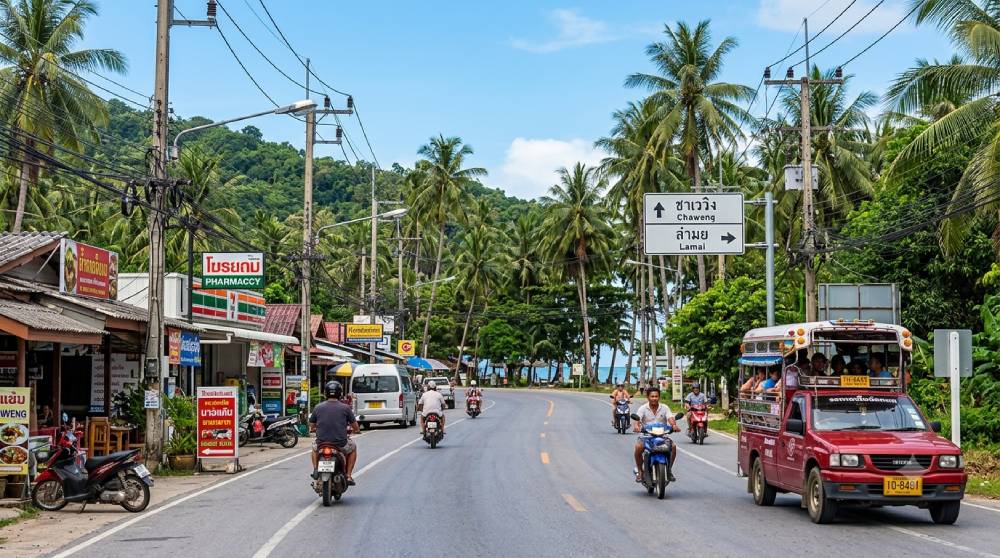
When choosing a car, don't rely solely on its size. It's much more important to understand where exactly you plan to travel. For 90% of travelers, a standard compact car is ideal. It will easily handle almost all the island's roads, allow for easy parking near beaches and cafes, and help you save significantly on fuel.
If you are traveling with a large group, with children, or want to explore all corners of the island, including mountainous areas and observation decks, it makes sense to choose an SUV crossover.
The key is to choose a car based not on the principle of "the bigger is the better," but on your itinerary and budget. In most cases, a city sedan or hatchback will be the most comfortable and affordable option for a vacation on Koh Samui.