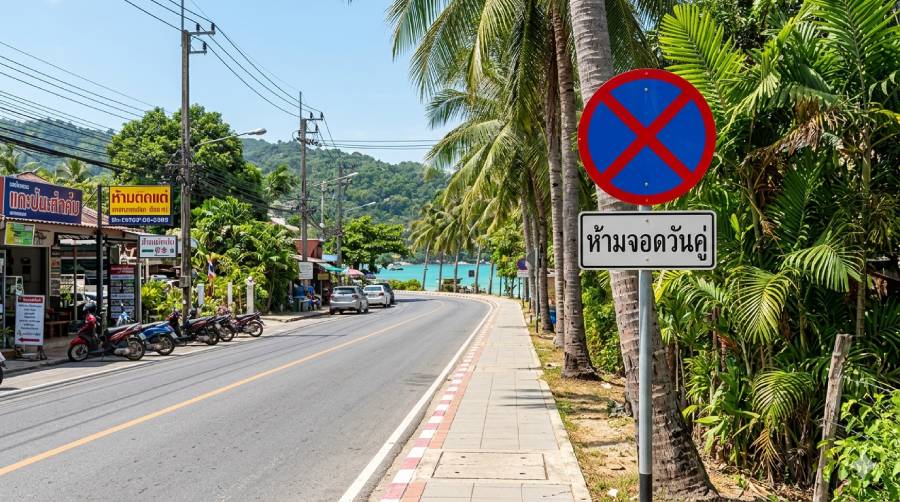
Koh Samui is the island of heavenly beaches, azure waters, and... a rather unique challenge called "finding a car parking spot." If you're planning to get around the island in a rental car, be prepared for the fact that size matters, and the rules are read between the lines. This article is a brief survival guide for those who decide to tackle the island's roads on four wheels. The features and subtleties of local parking and beaches.
Where can I park a car?
Variety of colors of borders
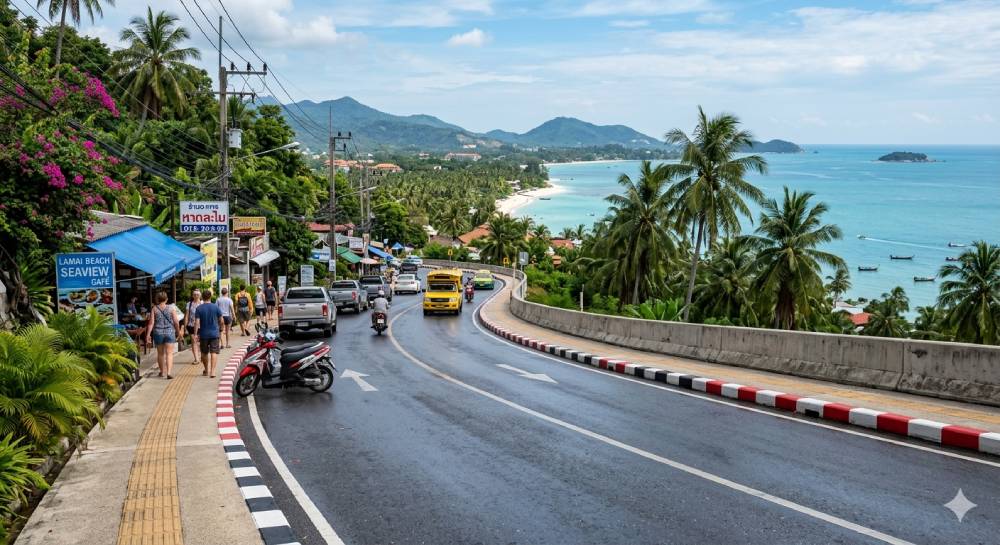
The first thing you need to learn is how to paint the sidewalks. In Thailand, it's not just decoration, but a strict budget regulator.
Red and white
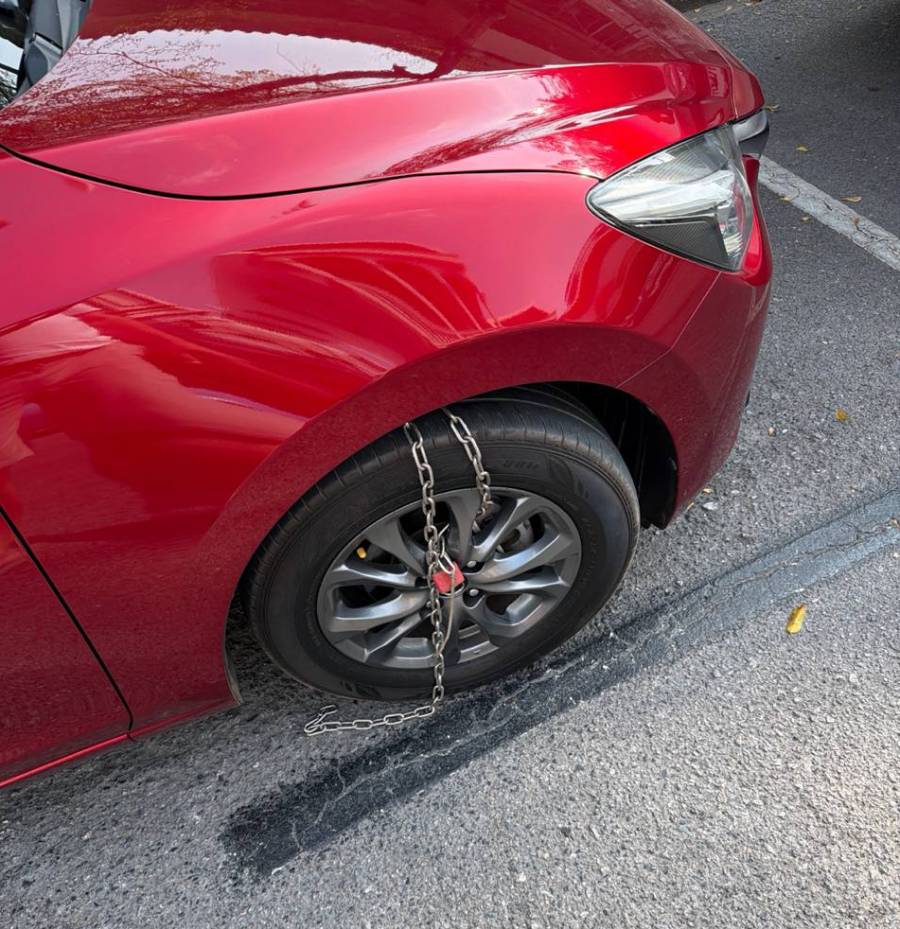
Parking is prohibited. Always. Absolutely. No exceptions. Not even for a minute. A 500 baht fine and a wheel lock are guaranteed. The renter, meaning you, pays the fine.
Yellow and white
Public transport stop/waiting area. You can stop for a few minutes to drop off passengers or make a quick getaway, but standing around for too long is not allowed.
Black and white
Parking is permitted and this is often how parking spaces are marked.
An important detail: if there are no markings, that doesn't mean you can leave your car. Pay attention to exits, make sure you're not blocking someone's exit from a store, home, or the path to a spirit house or shrine.
Parking signs
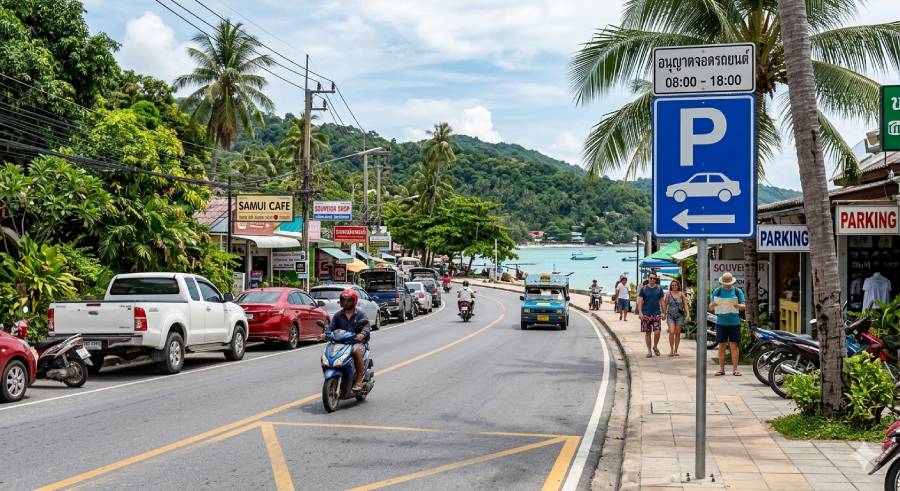
Besides the painted curbs, there are also the parking signs familiar to all drivers. The main one is the letter P in a circle or square. There's a distinction between scooters and cars. Pay attention to this. Then you'll see either a drawing of a car or a motorbike.
It's not recommended to park your car in designated scooter parking areas. Firstly, there won't be enough space, and secondly, your car could be blocked from all sides or scratched-scooter riders are generally not gentle with other people's vehicles, and you'll be responsible for any damage.
However, it's worth noting that motorbike drivers never comply with these rules and leave their vehicles even in parking lots, especially in shopping centers, depriving motorists of the opportunity to find a free space, of which there are already few on the island.
In addition to the letter P, you may come across signs with information about parking on different days of the week, dates and certain times of day, a taxi stand (from which you should stay as far away as possible - taxi drivers do not like it when people take their spots).
The "Odd and Even Days" Rule
This is the main pitfall for newcomers on busy streets like Lamai or Nathon. Some roads have signs that allow parking only on certain days.
How it works: On even days of the month, everyone parks on one side of the road, on odd days, on the opposite side.
Tip: If you see a completely empty side of the street where your SUV would fit perfectly, but the other side is packed with cars, don't get too excited. This isn't your preferred spot. You'll likely park under the sign, and within 15 minutes, a wheel lock will appear.
The main difficulties of roads on the island
Samui roads weren't built for heavy traffic, or for cars at all. Initially, only motorbikes used the roads, and they don't need much space.
Main problems:
Narrow shoulders: On the Ring Road, there are often no shoulders at all; the road immediately turns into a ditch or a fence wall. Generally, the main road has two lanes, but the left lane is always occupied by someone, unofficially used as a parking zone.
Storm drains: Deep concrete gutters run along the roads, collecting water. If you miscalculate your turning radius, you could end up with a spectacular wheel fall.
Chaotic bikes: Motorbikes are parked in tight rows. You might leave the store to find your car trapped between two rows of scooters.
Where to park your car: location life hacks
Shopping malls are your best friends.
If you need to get to the center of Chaweng, don't try to squeeze into a narrow street. Never park your car directly on the road. This area has only one lane in each direction, and you'll simply block traffic and create an accident, not to mention the high risk of damage to your car.
In the Chaweng area, there's a large public parking lot on the lake opposite the Central Samui shopping mall. It has two levels. The upper level hosts a market on Saturdays, but the lower level always has plenty of free space. There are also designated spots along the lake, right on the road. Alternatively, you can park directly in the mall's parking lot (free), but finding a space there can be difficult, and it's not ideal, as you'll be taking the space of someone who's actually shopping, not just looking for a spot.
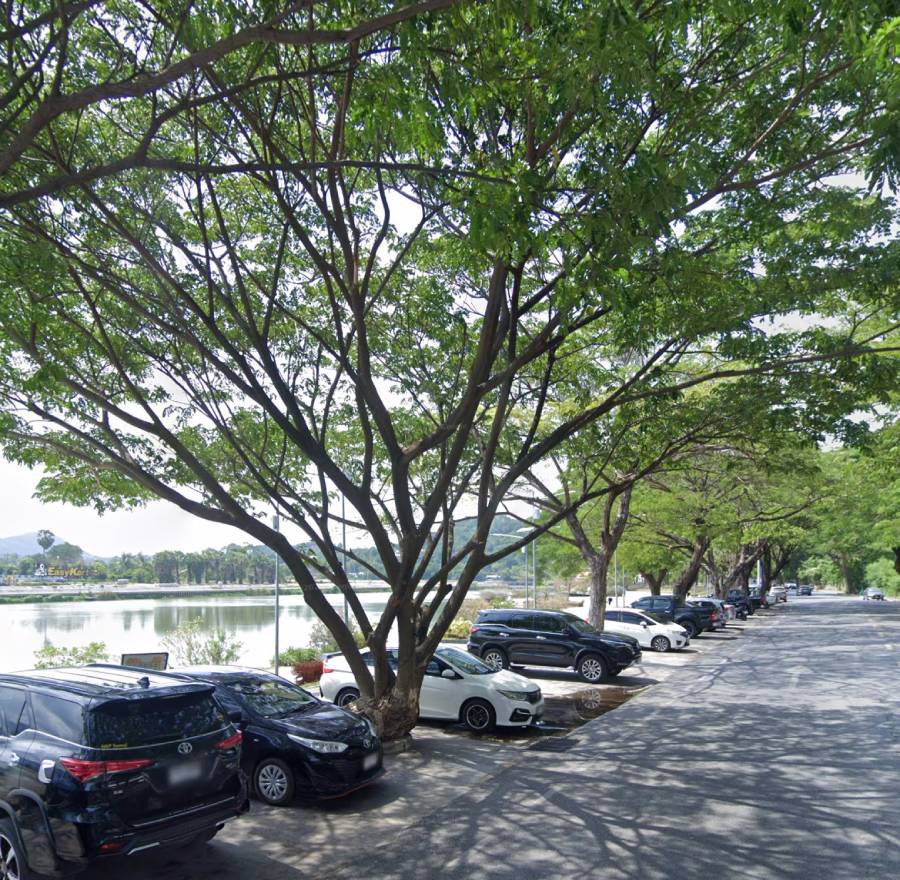
Big C / Lotus's / Makro Shopping Centers: You can also use the parking lots of these stores. Leave your car and walk to your destination. However, they are all located in the center of the island, away from the waterfront, so if you're heading to the beach, you'll have to walk several kilometers in the heat.
Paid private parking: Locals set up these on their own land. The cost is 20-60 baht, depending on the area.
Parking on Koh Samui's beaches
I'd like to pay special attention to this issue. As is well known, all beaches in Thailand are public and free; private ones are not and cannot be, as it's illegal. However, a huge number of private businesses-cafes, hotels, beach clubs, bars-have built up along the beachfront, and they block access to the beach. This means that to get to the beach itself, you have to cross someone else's property, and this is where conflict can arise. The business owner has every right to deny you access to their property, let alone park your vehicle there. They can even charge a fee for access. And so, a seemingly public beach becomes private. The Samui paradox.
This is what happened with Chaweng Noi Beach, for example. Access is completely blocked by expensive hotels. Access is restricted to resort guests, and to access the beach, you need to purchase a hefty day pass. This allows you to use all the hotel's amenities, including the beach, which is otherwise free.
This is a huge problem for most of the island's beaches. Public parking is virtually nonexistent. You're forced to either park right on the road, pay for private parking, or hope the beach business owners won't object to your intrusion.
Life hacks
You can park your car in the parking lot of a small guesthouse located on the shore. Most of them don't mind.
You can park at a beach cafe or bar, order something from the menu, and head to the beach. This action will pay for your "place in the sun."
If you're visiting Chaweng Beach , park your car at the Haven Shopping Center parking lot. It's large and there's plenty of space. The beach is a 5-7-minute walk from the center.
Lamai Beach - there's paid parking for 40 baht near the Bamboo and Cactus cafes (a landmark for the Astrococo resort). If you order something from them, parking is free. Just get the cafe's stamp on your receipt and show it to the valet. And if you arrive after 5 PM, it's free, as the staff have already gone home to sleep.
There's also a free parking lot with several spaces next to the Seabreeze Guesthouse. It's almost always full.
Maenam Beach
Free parking is available on the grounds of the Chinese temple, as well as the Buddhist Wat Na Phra Lan.
Crystal Bay Beach
Most vacationers' favorite. Nothing's free. Pay 60 baht and enjoy your vacation. You still have to cross the road there. It's a very dangerous stretch. Be careful.
Chong Mon Beach
There's a huge free parking lot here: https://maps.app.goo.gl/qGChwkp9EbA7ZWNN8
Lipanoi Beach
You can park at the end of the beach next to the military base and walk along the sea, or at the beginning next to the Lipa Bay Resort Hotel (spaces are limited).
Coral Beach
The Coral Cliff Beach Resort allows it or the Madam Juiy cafe, but you'll have to order something, as it's private property.
Bophut Beach
There's a large public parking area, known as The Wharf. There are also several paid parking areas.
Bangrak Beach
The area is very busy, it is difficult to find a place, even along the road.
Nathon District
This isn't a swimming beach. It's a pier where ferries from the mainland arrive. It's more suitable for strolling, sitting in a café overlooking the sea, and watching the sunset. A long promenade is available for drivers, as is a large parking lot next to the pier.
Tips and nuances
* Private area and plastic chairs.
In Thailand, there's a concept of "unspoken ownership" of the public road in front of a store or café. If you see a plastic chair, a rope, or a cone on the side of the road, it means the shop owner has staked out a spot for customers or to unload goods. Technically, this is illegal, but it's best to avoid conflict and avoid parking there. You never know what the owner might do in the heat of the moment. It's easier to drive a little further. If you absolutely must park there, enter the establishment and politely ask if you can leave your car. If it's a store, buy something, like a bottle of water. In 90% of cases, they'll let you.
Incidentally, in Phuket, police have already conducted raids to clear parking spaces along the roads and remove all these illegal obstructions. And guess what? A couple of days later, all the "guards" were back in place.
* Beware of palm trees!
Never park under palm trees with coconuts. A coconut falling from a height of 10 meters can turn your roof or windshield into mush. If you rent a car, this is your responsibility and you'll forfeit your deposit. Walking under palm trees is also dangerous. Your head is no stronger than your hood.
* Fold the mirrors.
The roads are narrow, and passing trucks and motorbikes do not always care about other people's property.
* The sun is the enemy.
This is especially true for dark-colored cars. When booking a rental car, choose lighter shades whenever possible. Try to find a spot in the shade, but remember point #1. If there's no shade, be prepared for the leather seats to turn into a scorching frying pan. Fabric interiors are less susceptible to overheating, but the car itself will still feel like a sauna. Don't rush into driving right away. Turn on the air conditioning for a couple of minutes to cool down the temperature before getting behind the wheel.
* Parking on steep hills
Koh Samui is a very rugged island. The Chaweng and Maenam areas are famous for their villas with breathtaking views and the equally breathtaking climbs leading to them. If you're planning to stay "at altitude," we recommend renting a car with an engine of at least 1.5 liters.
When parking on a slope, always turn your wheels toward the curb or shoulder. If the brakes fail, the car will hit the obstacle rather than roll off into the abyss.
* Don't forget about the handbrake.
* Use chocks: If you park on a very steep ramp, take the time to place a stone or something similar under the wheel.
* L (or B) mode is your assistant in the mountains. When driving on steep inclines, downshift the engine to avoid burning out the transmission.
* Try not to leave your car overnight in unlit dead ends or deep in the jungle. This isn't so much a problem of theft (which is rare on the island) as it is a problem of snakes and insects, which love to crawl into the warm underhood. Before driving, check under the hood and wheels to make sure nothing is lurking there.
* Koh Samui is generally safe, but there are plenty of unscrupulous people out there, and leaving a phone or wallet on a seat can provoke a random passerby. They'll break the window, and you'll lose not only your expensive item but also your rental deposit. The "empty cabin" rule applies worldwide.
* Weather and parking
The rainy season is November-January. Avoid parking in low-lying areas or near storm drains. Koh Samui floods very quickly and locally. Water levels can rise 30-50 cm in half an hour, turning your sedan into a piece of real estate.
* Unpaved parking lots.
The beautiful clearing near the "secret" beach turns into a clay skating rink after a downpour. If you don't have a 4WD, there's a good chance you'll be stuck there until the tractor arrives.
To make your road trip around Koh Samui as comfortable as possible, we'll add a few more important layers of information: from legal subtleties to the "guerrilla" methods of local residents.
What to do if you have a wheel lock?
If you do violate traffic rules, there is only one scenario:
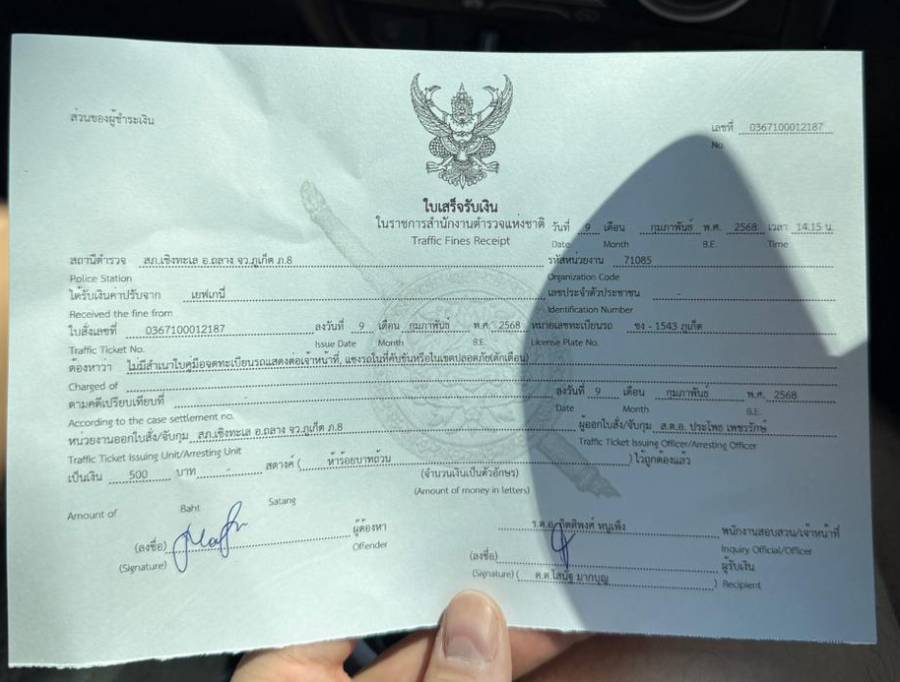
The police officer will leave a notice on your windshield—a notice of violation, urging you to appear at the station to pay the fine. With this notice, you need to go to the nearest police station, pay the 500 baht fine, receive a receipt, and return to your car. The wait for the officer to come and unlock your car can take anywhere from 10 minutes to several hours. All police stations can be found on Google Maps, or you can ask a local or contact your car rental company—they'll tell you where to go.
Subtleties of renting
What you need to know before shaking hands with a rental company:
License. To legally drive in Thailand and, more importantly, to ensure insurance coverage in the event of an accident, you must have a category B driver license. Ideally, the renter should have an IDP, but in the real world, a national license with an English translation will suffice. This is acceptable for the rental company and the insurance company, but not for the police, who have the right to issue a fine (1,000-2,000 baht). Fortunately, cars are rarely stopped. The police are on the lookout for scooter drivers, as the fines are higher for not having a license or riding without a helmet.
Child seats. In 2024, Thailand passed a law mandating child seats for children under 5. The law exists, but no one enforces it. It's largely your responsibility to ensure your child's safety. All car rental companies offer child seat rentals. Some charge a fee, others don't.
Insurance. If you rent a car from a company rather than a private individual, you can be sure that insurance is included. It's often included in the rental price, but it comes with a mandatory deductible—this is the maximum amount of your financial liability. In some cases, you can purchase an extended policy to remove the deductible, but this will significantly increase the daily rental price.
Photos and videos. Document all dents and scratches upon acceptance. Take photos slowly, and look under bumpers. This will save you unnecessary expenses upon return.
A lease agreement. It must be translated into English. Read it carefully, paying attention to all clauses related to money—how much and when you're obligated to pay. If anything's unclear, don't hesitate to ask the landlord. It's your money. Don't leave your passport as collateral.
Let's sum it up. A short checklist before getting out of the car:
1. If the slope is inclined, the wheels are turned and the handbrake is on.
2. The mirrors are folded.
3. There are no coconut trees with fruits above the car.
4. There is no food left in the car (ants occupy the car in 15 minutes).
5. You have not blocked the exit/entry to private property.
6. There are no no parking signs and the curbs are not painted red and white or yellow and white.