01
Complete the online booking form
Enter your dates, province, delivery area, preferred car class, and contact details. It is quick, simple, and saves you time.
Sabai Motors has helped people rent cars in Thailand since 2015. Our main destinations are car rental in Phuket and car rental in Koh Samui. We deliver the car to your hotel or the airport, insurance is included, and we speak English and Russian. Send us your dates and we will reply with options.
Enter your dates, province, delivery area, preferred car class, and contact details. It is quick, simple, and saves you time.
Available offers with all rental terms and the final price will appear in your personal account.
A representative will deliver your reserved car to the agreed place at the agreed time. There is no need to go to anywhere yourself.
Below are examples of actual offers prepared for individual requests. The final options depend on your rental details and will be sent after you submit a request.
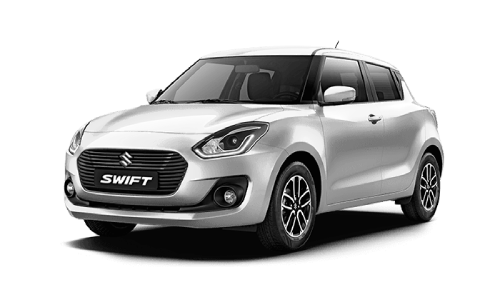
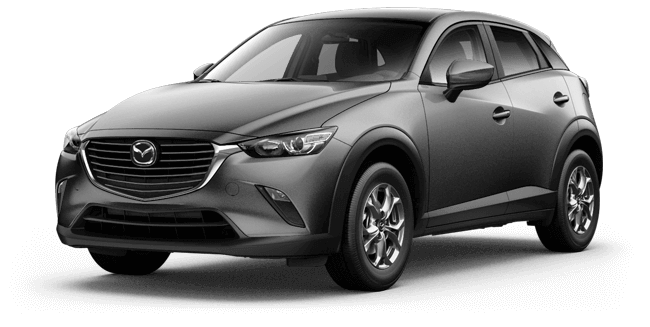
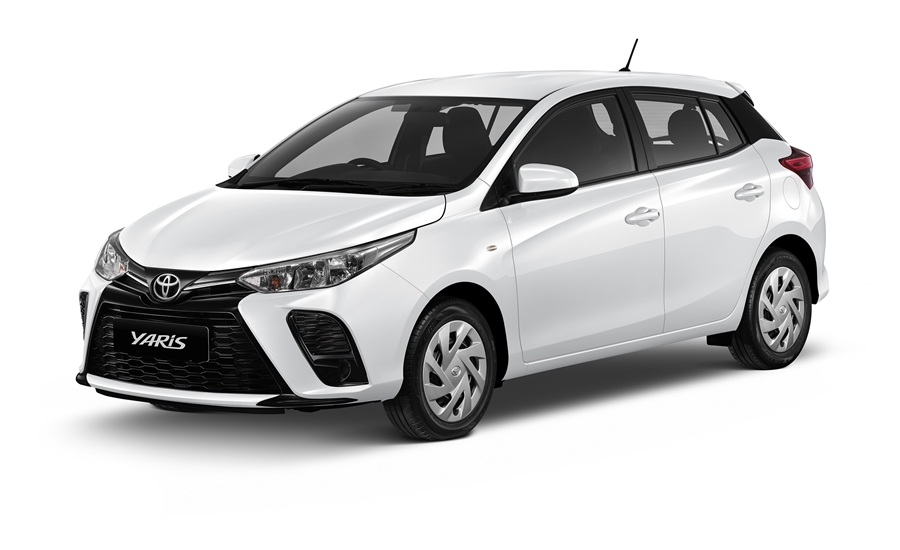
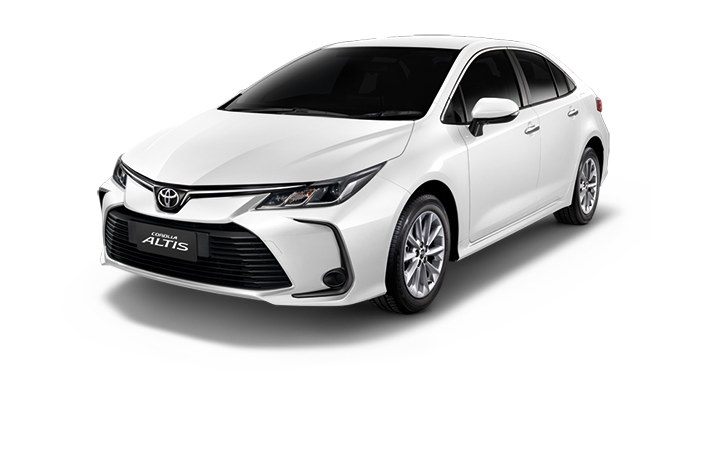
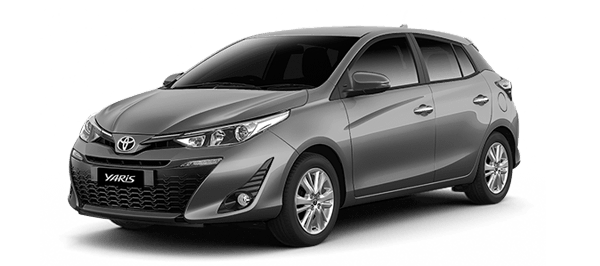
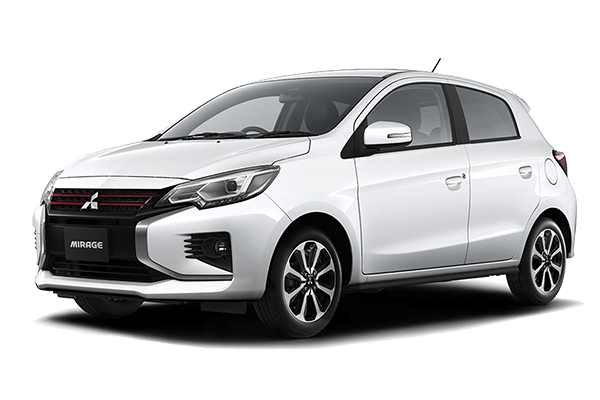
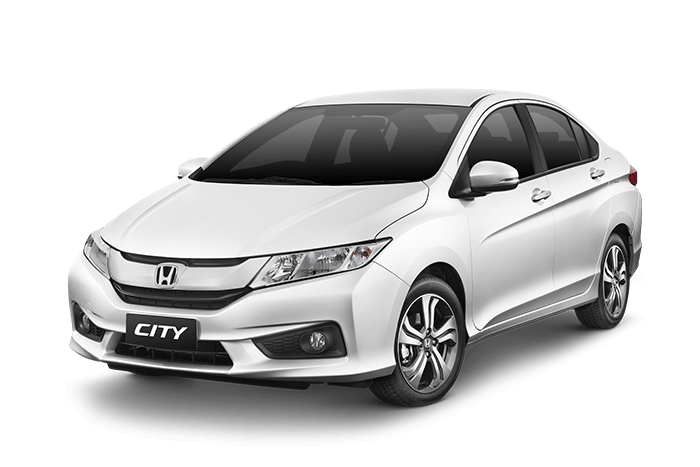
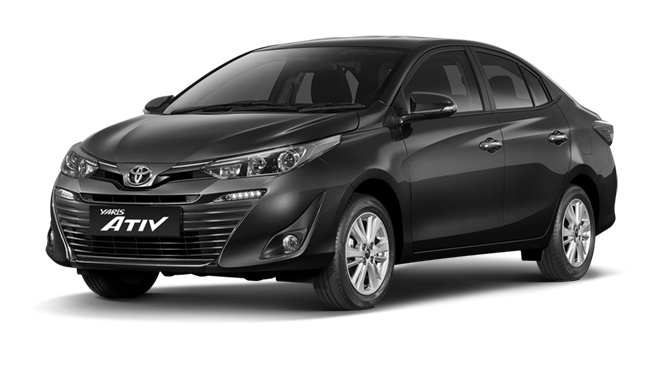
| Car class | 1–6 days | 7–29 days | 30+ days |
|---|---|---|---|
| Standart from 550 ฿/day | 980 ฿ | 790 ฿ | 550 ฿ |
| Premium from 1,020 ฿/day | 1,460 ฿ | 1,190 ฿ | 1,200 ฿ |
| SUV from 830 ฿/day | 1,610 ฿ | 1,560 ฿ | 830 ฿ |
| MPV from 950 ฿/day | 1,650 ฿ | 1,400 ฿ | 950 ฿ |
The longer the rental period, the lower the daily rate.
These are average prices based on actual bookings. The final rental price is calculated individually for each request.
Reviews from real customers who have already rented a car in Thailand through Sabai Motors.


Answers to the most common questions about renting a car in Thailand, including the booking process, required documents, insurance, deposits, payments, car delivery and return, and other important details to help you quickly find the information you need and prepare for your rental.
You will need:
Yes. The sum of deposit depends on the car class and destination: THB 2,000, 3,000, 5,000, 7,000, 10,000, or 15,000. The exact amount will be stated in the offers you receive. You can pay in cash in Thai baht, US dollars, or euros, or by debit card. Cash is returned in the same currency in which it was paid. Deposit paid by card can only be returned in Thai baht.
Yes. All cars are insured with a mandatory deductible. The full insurance terms will be included in the offers you receive. Insurance with no deductible is not available.
We recommend it, especially during the peak period from mid-December to mid-January. Booking early gives you a wider choice of available cars.
Yes. Prepayment is required when you book seven or more days before the rental starts. It guarantees that your chosen car will be available on the day of your rental.
To drive a car in Thailand, you must have an International Driving Permit or a Thai driver's license.
Yes. A car can be delivered and returned at any location. The cost depends on the rental period and the area.
Sabai Motors support remains available throughout your rental. You can contact us via WhatsApp, Telegram, Line, by phone, or through the chat in your personal account on the website.
Yes. The minimum rental period is 3 days.
No. You can pay the rental fee and deposit in cash or by debit card.
Notify Sabai Motors support about the accident. Take a picture of the accident scene and any damage of the car, then send the photos to your manager in the chat. Do not move the car. If it is blocking traffic and the police ask you to move it off the road, take as many photos and videos of the accident scene as possible first. Wait for the insurance company's representative to arrive.
Yes, upon request. The cost depends on the rental period.
Yes. The important thing is that every driver has a valid driver's license.
An English-speaking Thai representative will deliver the car to the agreed location. You should inspect the car for existing damage and take photos and videos of the exterior and interior. Read and sign the rental agreement. The fuel level is recorded in the agreement, and the car must be returned with the same amount of fuel.
An English-speaking Thai representative will come to the agreed location and pickup the car. He will check it for new damage and inspect the fuel level. If everything is in order, your deposit will be returned. If there is any damage or missing fuel, the related cost will be deducted from the deposit, either partially or in full.
Yes. You can pay the rental fee and deposit in cash in Thai baht, US dollars, or euros.
Articles to help make renting a car in Thailand simple, safe, and comfortable. Here you will find driving advices, explanations of local traffic rules, tips for choosing a car, travel routes, practical tips for tourists, and other useful information.
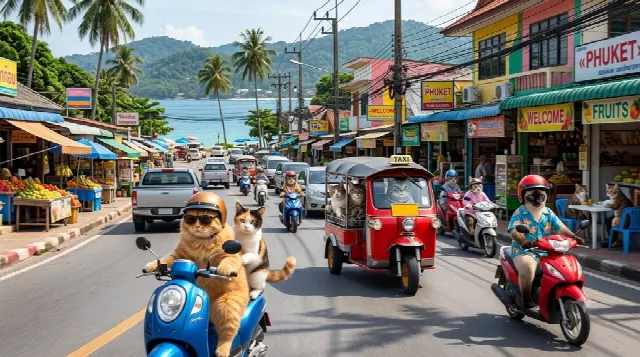
If you're heading to Thailand and deciding between Phuket and Koh Samui, one of the most important decisions you'll have to make is how to get around. The transportation situation is radically different. Let's figure out where it's best to rent a car and where you can relax and take a taxi or public transportation without breaking the bank.
Read more
when it comes to renting a vehicle, the first question that arises is: when is the best time to start researching and booking?
Read more
Thais almost never honk at each other. Why, in a country with such chaotic traffic, does no one honk? Let's figure it out, because it's not about traffic rules, but about the unique Thai mentality.
Read more
Sooner or later, a chilling question arises in the mind of any driver in Thailand: "What happens if we collide? Who will pay?" Surely, while researching the country before your trip, you've read a bunch of myths and horror stories about how in Thailand the farang (foreigner) is always to blame for everything. In this article, we'll dispel a few of them.
Read more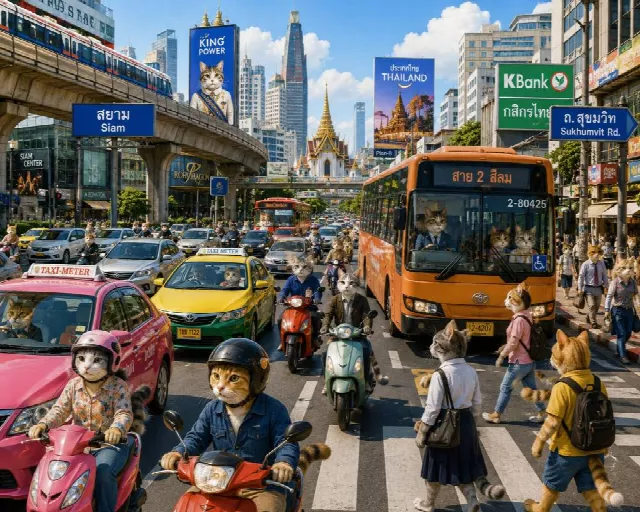
When you are ready to hire a vehicle, you'll almost certainly encounter the concept of a deposit. Many tourists worry about this payment, especially if they're renting a vehicle for the first time. In fact, there's nothing to worry about if you understand how it works in advance. What is it, why is it necessary, and, most importantly, how can you be guaranteed a refund? Let's find out!
Read more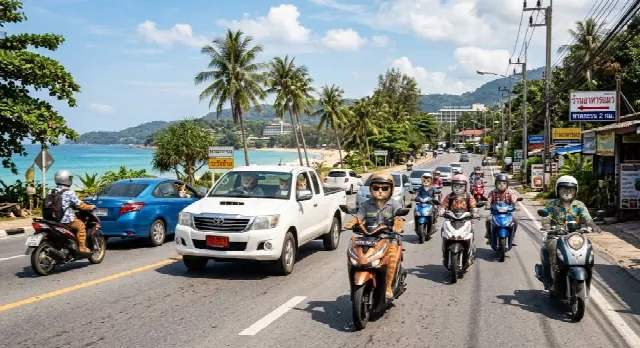
The choice of cars is quite large and you can simply get buried in all the characteristics and parameters. The makes and brands do not differ from those that drive on the roads of Europe. Toyota, Nissan, Honda, Mazda. What then should a tourist choose - a familiar sedan, a trendy crossover, or a brutal pickup truck? At first glance it seems that there is not much difference, but in practice the type of car can strongly affect the comfort of the trip. Let's figure it out in simple language.
Read more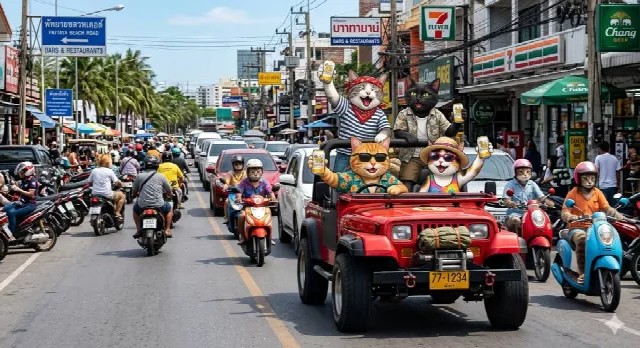
In Thailand you hop on a scooter in shorts, the wind is in your face, and no one seems to respect the rules of the road. This creates a dangerous illusion among tourists: "In Thailand, you can drive drunk; the police will charge you a couple thousand baht, and everything will be resolved." They mistakenly believe that foreigners will be given leniency, as if they were ignorant of the law. In reality, the opposite is true: if a visitor gets into trouble with the police, the consequences can be even more serious than for locals.
Read more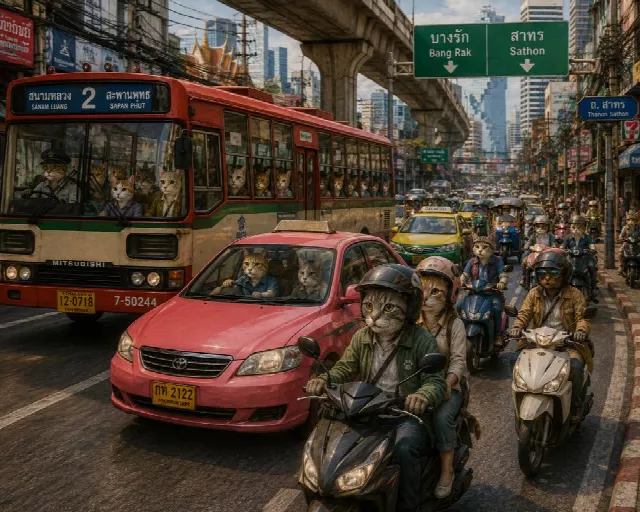
Hire a transport in Thailand is an absolute freedom, but it's also where inexperienced tourists most often lose money. And this "scam" doesn't necessarily involve outright fraud: sometimes rental companies simply exploit your inattention and legal ignorance. The rules of the game for cars and motorbikes are very different. Let's break down how to protect your wallet.
Read more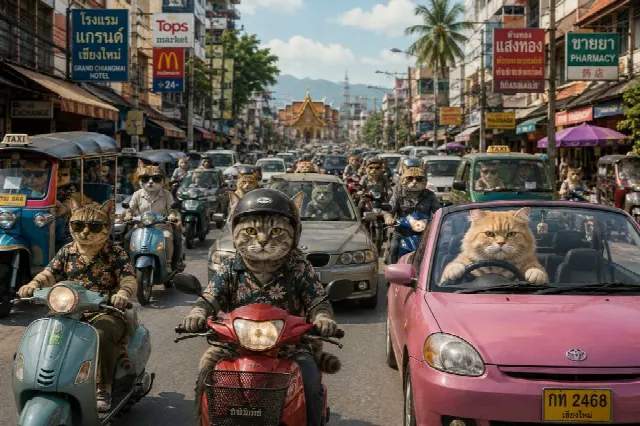
Traveling around Thailand in your own vehicle offers freedom of movement and the chance to see places inaccessible to most tourists. However, traffic in the country is heavy and drives on the left side of the road, and the abundance of nimble scooters can be overwhelming at first. To prevent your trips from becoming a stressful quest, your smartphone should be road-ready. Here's a selection of essential apps that will make life as a driver in Thailand much easier and safer, and your driving experience more comfortable.
Read more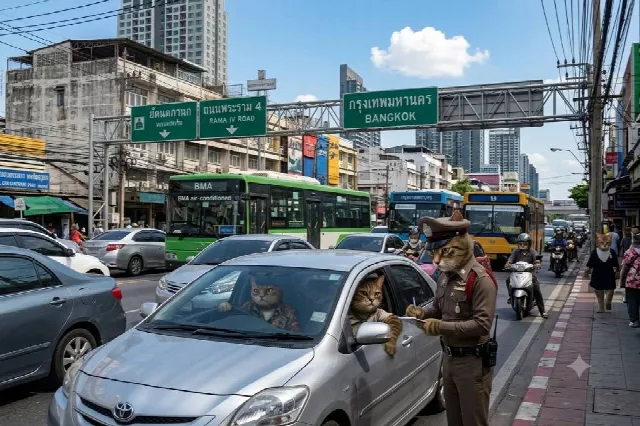
If you're a tourist or expat in Thailand and driving a vehicle, whether a car or a scooter, sooner or later you might encounter the traffic police. Running into a police checkpoint is a common experience for almost everyone
Read more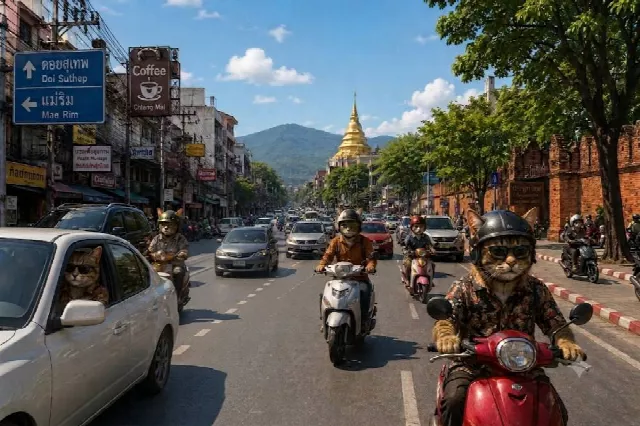
If you're planning to hire a motorbike or a car in Thailand, it's important to remember: local roads are very different from those in Europe. To ensure a safe and hassle-free trip, this article is a must-read.
Read more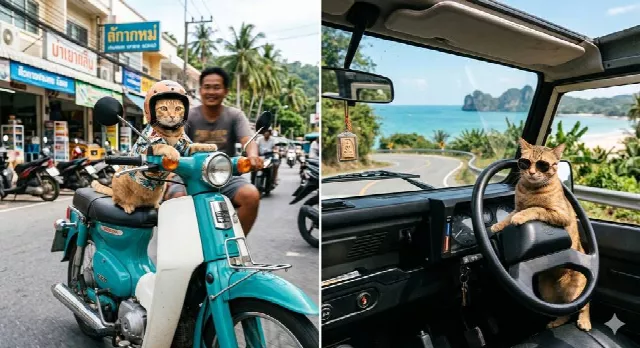
You arrive in Thailand and start wondering which transport is better: a fast, maneuverable motorbike, a budget-friendly but far from safe one, or a car? Especially if you're traveling with your family. In this article, we'll compare a motorbike and a car-which is more cost-effective, safer, and more convenient. Ultimately, the decision is yours.
Read more