
If you're a tourist or expat in Thailand and driving a vehicle, whether a car or a scooter, sooner or later you might encounter the traffic police. Running into a police checkpoint is a common experience for almost everyone: whether you're a tourist renting a bike or a car, an expat, or a local. There's no need to panic: Thai police in tourist areas are accustomed to foreigners and are quite friendly, as long as you don't escalate the situation. For many drivers, such an encounter can be stressful, although in reality, there's nothing scary about it.
In this article, we'll explain the process in simple words and outline a step-by-step procedure, current fines, and legal payment methods.
How to deal with Thai police
The first rule is don't panic.
Thailand is a relatively calm country, and local police are generally polite. Thais value politeness and the concept of "Jai Yen" (coolness of heart) above all else. Aggression, shouting, or asserting one's rights will ruin any chance of a peaceful outcome. Avoid arguing, raising your voice, or attempting to flee. This will only escalate the situation. Thais generally don't respond well to shouting and will often shut down. A smile is always the key.
Your actions :
- Stop. Park carefully in the designated area. Be sure to pull over, take off your helmet (if you're on a scooter) and sunglasses, and open the window (if you're driving). This is a basic sign of respect that police officers will immediately appreciate.
- Activate friendliness mode. Smile and greet politely. You can say "Sawadee krap" for men or "Sawadee ka" for women. And add "Sabai di mai?" - how are you? Thais are very responsive when a foreigner speaks Thai. This will immediately put the police officer in the right mood. Don't fidget, put your hands in your pockets without warning, or show that you're in a hurry.
- Present your documents. If requested, show your International Driving Permit (IDP) with the correct category (or thai driver license, if applicable), a copy of the first page of your passport and entry stamp\visa (a photo on your phone is acceptable), and your bike/car documents. If you're renting a vehicle, the rental agreement is sufficient. However, police rarely check your passport or vehicle documents, but exceptions do occur.
- Get a ticket. If you violated the law, the officer will write you a ticket. Accept it calmly. If the officer lets you go, go ahead. You can pay the fine at the nearest police station. However, often the fine is paid on the spot.
What can you be fined for?
Most often, drivers are fined for:
* Lack of an international driving license and the required category;
* Riding without a helmet;
* Incorrect parking;
* Driving through a red light;
* Speeding.
On the popular tourist islands Phuket and Koh Samui and at mainland resorts, checks are carried out regularly, so don't count on getting away with it. However, checkpoints are usually set up in the same places, so you can try to find a detour. Or better yet, don't break the rules.
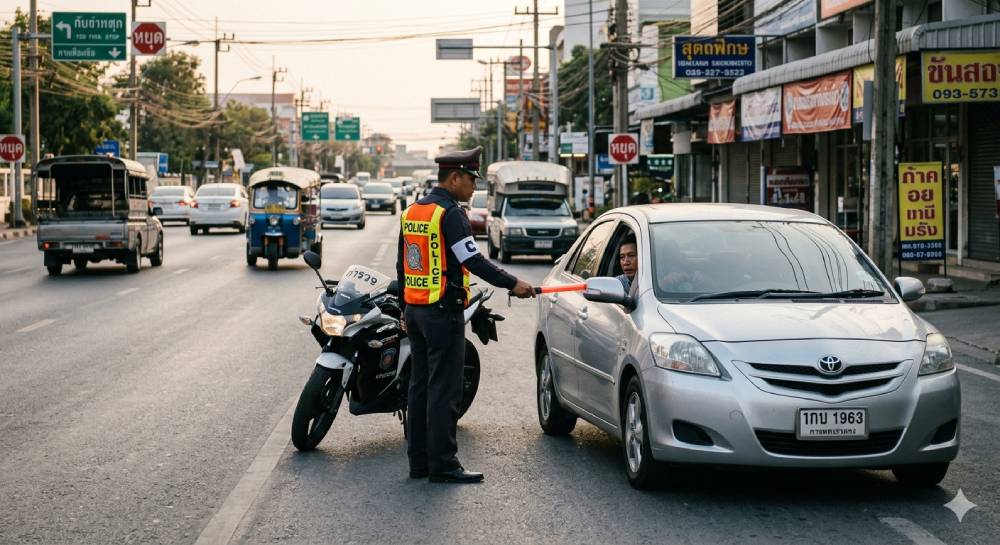
If i don't have an international driver license
This is one of the most common reasons for fines. Many tourists think that their national driver license is sufficient. The Vienna Convention allows driving in other countries with a national driver license, and Thailand is one of the countries that has signed but not ratified it. Police officers follow the rules of the Geneva Convention: driving a motorcycle or a car requires an IDP of the appropriate category: A- for a scooter, B- for a car. Without one, you can be fined. And 99% of vacationers who choose motorbikes don't have a license at all and are riding a motorbike for the first time. According to law, rental companies are supposed to turn away such customers, but then they'll lose most of their income, so they happily rent out their bikes without worrying about the consequences.
How much will you have to pay: current fines for 2026
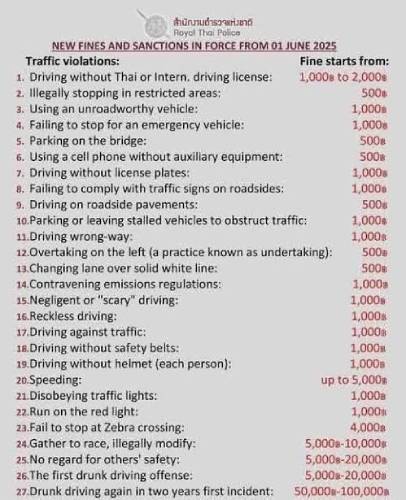
In 202 fines increased significantly for some items:
- Riding without a helmet (both driver and passenger are fined) - 1000 ฿
- Driving without an IDP (or the wrong category) - 1000-2000 ฿
- Driving on the wrong side of the road - 1000 ฿
- Unfastened seat belt in the car (each passenger) - 1000 ฿
- Speeding - up to 5000 ฿
- Running a red light - 1000 ฿
- Parking in the wrong place - 500 ฿
- Drunk driving (first time) up to 20,000 ฿, second time up to 100,000 ฿ or up to a year in prison
The amounts may change, you can bargain on the spot.
Important regarding alcohol: In addition to a fine, drunk driving is guaranteed to result in arrest, a night (or weekends) in a police station cell, and trial (in Thailand, there is a presumption of guilt).
Do I have to pay the fine on the spot?
If you're asked to simply hand over money without a receipt, it's best to politely ask for an official ticket. The legal procedure is as follows:
1. A police officer writes out a fine.
2. Gives you a receipt.
3. Pay the fine at the designated location or through an official service.
4. Receive payment confirmation.
Having a receipt protects you from possible misunderstandings and fictitious fine amounts.
How to pay fines correctly
The system today is as transparent and digital as possible, so classic stories about "negotiating on the spot" are gradually becoming a thing of the past, but they haven't disappeared completely.
The official and most reliable way:
- A police officer writes you a paper ticket stating the violation. This doesn't have to be at a checkpoint. If you violate parking rules, the officer will block your tire and leave a ticket on your windshield.
- You take this ticket and go to the nearest police station in the area where you were stopped.
- At the station, go to the fine payment window, hand over the ticket, pay in cash at the cashier, and be sure to receive an official receipt.
- If your driver license has been confiscated, the officer at the station will return it to you after payment.
Lifehack: A ticket issued for not having a driving license or a helmet is "immunity" for 24 hours. If you're stopped by another patrol officer the same day, simply show them the latest receipt (or the ticket itself, if you're still on your way to the station). You won't be fined again for the same violation within 24 hours. However, it's still best to wear a helmet.
What happens if you don't pay?
Don't ignore fines. Unpaid violations can create problems:
* When extending a visa or undergoing some administrative procedures;
* When selling or returning a vehicle;
* During subsequent document checks.
In addition, if the violation is serious, the case may go to court.
Some useful tips
To avoid trouble:
* Always wear a helmet;
* Obtain an international driving license in advance of your trip;
* Don't drive under the influence;
* Observe the speed limit and other traffic rules;
* Keep a photo of your passport on your phone or make a paper copy.
And most importantly, take the inspection calmly. For the local police, it's business as usual, but for you, it usually ends with a few minutes of conversation and a document check.
Result
If you're stopped by the police in Thailand, don't get nervous or try to argue. Show your documents, listen to the reason for the stop, and if you were given a fine, ask for an official receipt. In most cases, the situation is resolved quickly and without any serious consequences.
The best way to avoid fines is to get an international driver's license in advance, wear a helmet, and obey local traffic laws. Drive carefully, respect the locals, and obey traffic laws-then your interactions with the Thai police will be limited to a few polite smiles.