
Foreigners come to Phuket or Koh Samui in Thailand and are amazed: the traffic is crazy, motorbikes are driving from all directions, cars are changing lanes without turning signals… But at the same time, it's almost completely silent. No one honks their horns every five seconds. For someone accustomed to European roads, this seems unusual. In the first minute, half the drivers would have already managed to express their thoughts to each other by honking. There, the horn is used for any reason: someone is slow to move, hasn't turned on a turn signal, or is simply lost in thought at a traffic light. In Thailand, things are completely different. Thais almost never honk at each other. Why, in a country with such chaotic traffic, does no one honk? Let's figure it out, because it's not about traffic rules, but about the unique Thai mentality.
Honking here is considered rude
For us, honking in traffic is a sacred act. It means, "Hey, where are you going?" or "Hurry up, the light's been green for a second!" In most cases, it's a way to vent negative energy onto others. For a Thai, honking a car horn is equivalent to shouting loudly or even cursing in the street. In Thai culture, public displays of aggression are taboo. Yelling or getting angry means you've lost control and, worst of all for an Asian, you've "lost face." Thais live by the principle of "jai yen" (cold heart). A driver who honks their horn is perceived as an insane person with a "jai ron" (hot heart), best avoided altogether. In the local culture, where it's customary to remain calm and avoid embarrassing others, this is considered impolite. Therefore, even if someone pauses at a green light, most drivers will simply wait. Unprovoked honking can be seen as an insult or an attempt to humiliate the other driver. Thais try to avoid open conflict, so they prefer to simply wait a few seconds.
Nobody is in a hurry
At the heart of this tranquility is complete relaxation. Locals live as if in slow motion. So, I'll wait an extra 15 seconds at a traffic light- I'm in no hurry. For a tourist coming from Moscow, London or New York, where life is hectic, the locals seem like real turtles, and not just on the road.
The philosophy of "Sabai-Sabai" and "Mai Pen Rai" or "don't worry, be happy." These phrases are the foundation of the Thai worldview.
Sabai-sabai is when you feel good, comfortable and relaxed.
Mai pen rai translates as "it's okay", "don't worry".
Did someone cut you off? May pen rai. Someone driving slowly down the middle of the road on an old scooter with three kids and a dog? Sabai-sabai, we're in no hurry. Life's too short to ruin your karma with road rage. Yes, sometimes you have to waste a few seconds. But for the locals, that's better than creating tension on the road.
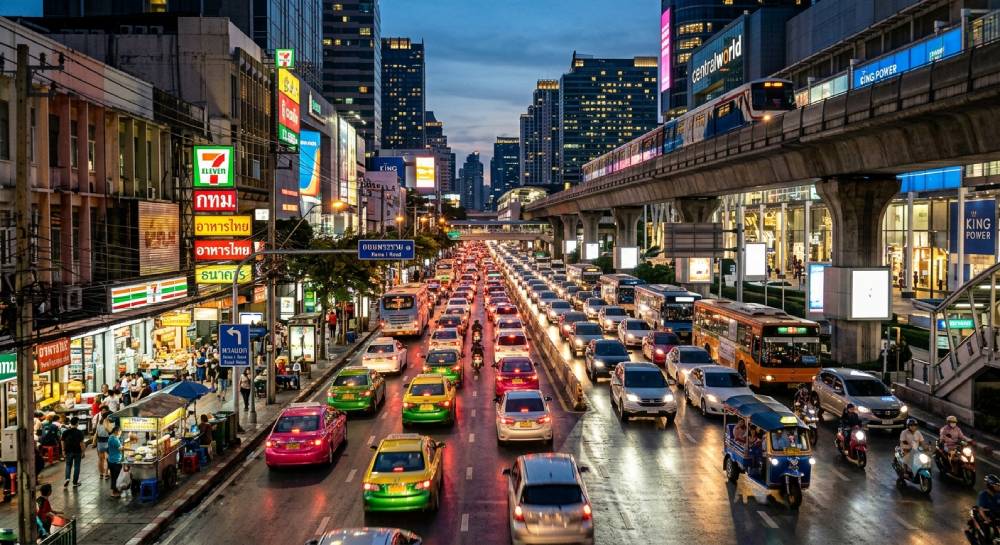
Mistakes are taken more calmly here
Popular tourist cities are overrun with travelers driving on the left side of the road for the first time. Some accidentally change lanes, some turn too slowly, and some even forget where they are. Locals have long since gotten used to this. Instead of honking, they often simply slow down or go around such drivers.
But sometimes they still honk
Of course, it can't be done completely without beeps.
For example:
* to warn a driver who is starting to reverse;
* if there is a risk of an accident;
* when the person in front simply doesn’t notice that movement has already begun;
* to warn of your approach on a narrow road, a short and quiet "beep" is a polite warning: "Buddy, I'm in your blind spot, be careful."
* two short "beep-beep" is a way to say "thank you" or say hello to someone you know.
* greeting the spirits. If you're driving on the highway and hear someone honking into the void, take a closer look. Chances are, there's a spirit house, a sacred tree, or a Buddha statue on the side of the road. This is how drivers pay respect to the higher powers and ask for a safe journey.
That is, the signal is used specifically as a warning of danger or as a sign of gratitude, and not as a way to express irritation.
This doesn't mean Thais are perfect drivers. There are plenty of mistakes on Thai roads. Someone might suddenly make a U-turn, pull out in front of you, swerve head-on into oncoming traffic, or stop in the middle of the road. But instead of honking their horns, most simply accept the situation and drive on.
The Greng jai Philosophy That Drives Foreigners Crazy
Greng jai also deserves a mention here. It's the foundation of Thai life and culture. This word explains everything: from their eternal smiles to their actions, which seem strange to our stern eyes. Literally translated, it means "heart flutter." Or, to put it simply, it's an extreme degree of tact and a terrifying fear of causing even the slightest inconvenience to another person. For a Thai, there's nothing worse than being a burden to someone, making them tense up, or, God forbid, ruining their mood. And this philosophy permeates their every day, including driving.
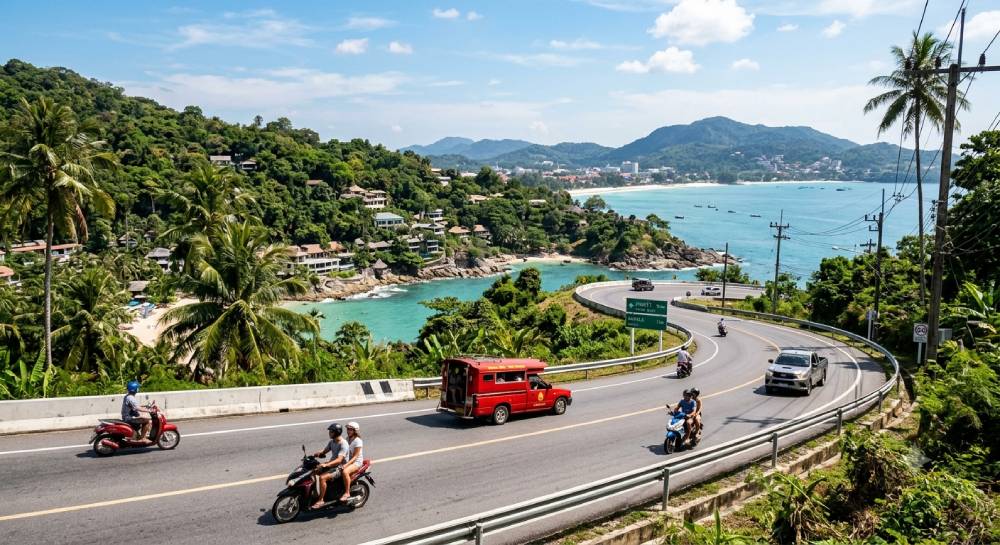
What does "Greng jai" look like in real life?
If you come to Thailand with our usual pushiness, you'll constantly bump into this invisible wall. Here's how it manifests itself in everyday life:
* Thais don't know how to say "no." A direct refusal, in their view, is rude and will upset you. So instead of a clear "no," you'll hear: "maybe," "I'll try," "we'll see." A local person might agree to meet you, knowing in advance that they won't show up, simply because they didn't want to upset you with an immediate refusal. The fact that they ultimately lied and you wasted your time doesn't matter to them. The important thing is that they didn't refuse you.
* Be patient until the last minute. If a local is riding in a taxi and the icy air conditioner is blowing down their neck, they'll likely remain silent and pull on a sweater. Asking the driver to turn down the temperature would be disturbing and would make them take their eyes off the road.
* Fear of asking for help. Even if he really needs help, he'll think three times before turning to you. After all, it will take up your time and energy.
* No bad news. A subordinate will hide from their boss until the very last minute that the project is in tatters and the deadlines are missed. Why? Because the boss will be upset. This is also a manifestation of perverse concern, in the style of greng jai.
* Don't complain. Thai service generally leaves much to be desired. There's even a term for it: Thai-style service. A lack of concern and a relaxed attitude permeates everything. This is because locals aren't used to complaints about poor service, and when a foreigner starts complaining, they get the famous smile and a nod, and ultimately... nothing changes.
Road behavior is also completely imbued with this philosophy. Honk on the road- a harsh sound that can cause stress in other drivers. Furthermore, the driver who honks points out the other driver's mistakes, thereby losing face.
Two sides of the same coin
On the one hand, it's thanks to Greng jai that Thailand is such a comfortable, safe, and welcoming country. People are rarely rude, don't cut in line, and don't blast music at full blast at night. Everyone is very respectful of each other's personal space. But for expats, this often becomes torture. We're used to directness: if there's a problem, let's discuss it. For a Thai, this approach is too aggressive.
It's important to remember that while locals may avoid negative behavior in public, a friendly smile can conceal a veritable hurricane of negative emotions. No one has forbidden you from thinking negatively about your interlocutor. That's why you never know whether a Thai is smiling at you genuinely or just trying not to lose face.
What foreigners should remember
If you're renting a vehicle in Phuket, Koh Samui, or other tourist spots, try not to honk your horn unnecessarily. It's not prohibited, but local drivers may interpret it quite differently than you're used to. It's best to exercise a little patience. That's why Thailand's roads, despite their apparent chaos, are often much calmer than you might expect. Take a breath. Ditch the habit of honking at everyone at home. Be polite, smile, check your mirrors, and remember: not aggression but total zen is on the roads here.