
Thailand is famous for its parties, bars, and beach holidays, and many associate the local roads with complete freedom, as if they were playing a video game and having multiple lives: you hop on a scooter in shorts, the wind is in your face, and no one seems to respect the rules of the road. This creates a dangerous illusion among tourists: "In Thailand, you can drive drunk; the police will charge you a couple thousand baht, and everything will be resolved." They mistakenly believe that foreigners will be given leniency, as if they were ignorant of the law. In reality, the opposite is true: if a visitor gets into trouble with the police, the consequences can be even more serious than for locals. Over the past couple of years, Thai authorities have tightened the screws. Today, getting behind the wheel after a few drinks is the fastest way to ruin your vacation, lose a ton of money, or even end up back home in handcuffs.
What is the legal alcohol level? How much can i drink while driving?
In the Land of Smiles, alcohol levels are measured in milligrams per 100 milliliters of blood (or per mille). The rules are strict and depend on your age and the type of driver's license you hold:
* 0.5 ppm (50 mg/100 ml or 0.05% BAC) is the limit for experienced drivers over 20 years old who hold a Thai license or an International Driving Permit (IDP). In practice, this is literally one bottle of light beer (0.33 l) or one glass of wine. And even then, everyone's metabolism and reaction to alcohol differs. Thais, for example, get quite drunk after just a few sips of beer, which is why it's common to drink beer with ice. Ice makes the drink weaker.
* 0.2 ppm (20 mg/100 ml or 0.02% BAC) is the limit for those under 20 years old and, accordingly, with limited driving experience, and those who don't have a driver license at all. For example, 99% of tourists renting motorbikes drive without a license (by law, you must have a Category A IDP). Essentially, you're already a violator if you drive without a driving permit, and if you've been drinking, you can pack your bags for jail.
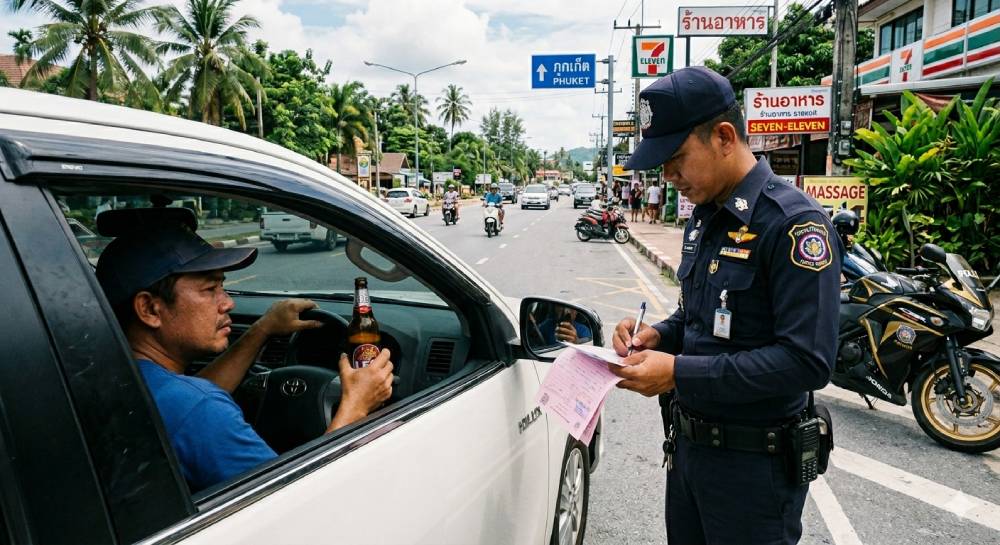
It is important to understand that the amount of alcohol consumed and the blood alcohol level are not the same thing. Even a couple of cocktails in the evening can put you over the limit, especially if you're riding your bike after midnight.
What happens if you're stopped drunk: a step-by-step nightmare
If you think you can "negotiate" on the spot, forget it. These days, most checkpoints are often equipped with cameras, and the police are monitored. The process looks standard and very unpleasant:
- Breathalyzer test. When you're stopped, you'll be asked to blow into a tube.
Is it possible to refuse a breathalyzer?
You can, but refusing is considered an automatic admission of guilt. In Thailand, there's a presumption of guilt. You risk the same penalties as for confirmed alcohol intoxication: a fine, jail time, and license revocation. Therefore, the idea of "not blowing into a tube and they won't prove anything" doesn't work here. If you don't blow into a tube, the police have the right to immediately charge you with a drunk driver, take a urine sample, or forcibly take you to the hospital for a blood test.
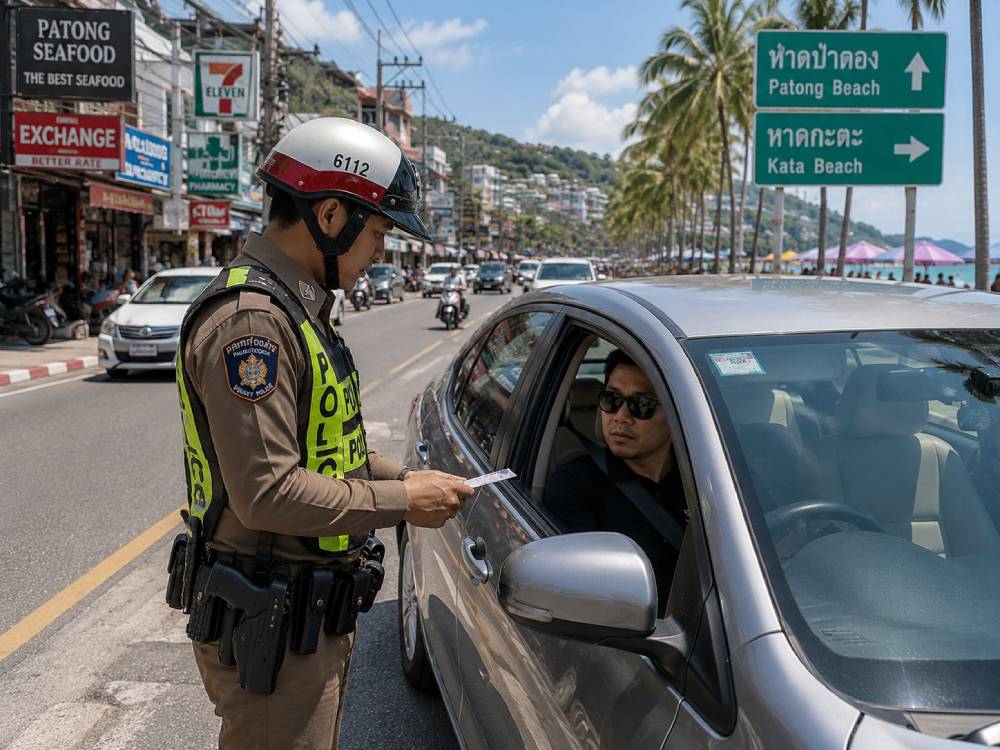
- Detention and transfer to the police station. From a couple of hours to several days.
You won't be released on parole. Your bike or car will be impounded, and you'll be taken to the local police station and thrown into a cell (the same Thai "prison cell"). You'll be held there until your trial. If you're caught on Friday evening, you'll spend the entire weekend in a cell, as the courts are closed until Monday. Your phone and personal belongings will be confiscated.
- Court. Final verdict.
You're assigned a state attorney (or you hire your own) and taken to court. The judge delivers a verdict in a couple of minutes. There's no way out: the DUI conviction rate is approaching 100%.
Checks are especially active in popular Phuket, Pattaya, and Koh Samui, during holidays, including Songkran and New Year, when numerous police checkpoints are set up on the roads. During Songkran, the number of drunk drivers and accidents increases significantly.
What is the fine?
The punishment depends on how much you "distinguished yourself." There's no leniency for foreigners-the law is the same for everyone, and may even be stricter.
First-time offenders without an accident face fines ranging from 5,000 to 20,000 baht or up to 1 year in prison. A driver license suspension for at least 6 months.
Repeatedly within 2 years - up to 20,000 baht and up to 2 years in prison (real term).
What if there is an accident?
Then the punishment becomes much harsher.
If people are injured - imprisonment from 1 to 5 years; a fine from 20,000 to 100,000 baht.
If serious bodily harm is caused - imprisonment from 2 to 6 years; fine up to 120,000 baht.
If a person died, the penalty is imprisonment for 3 to 10 years; a fine of 60,000 to 200,000 baht; and a lifetime ban on driving.
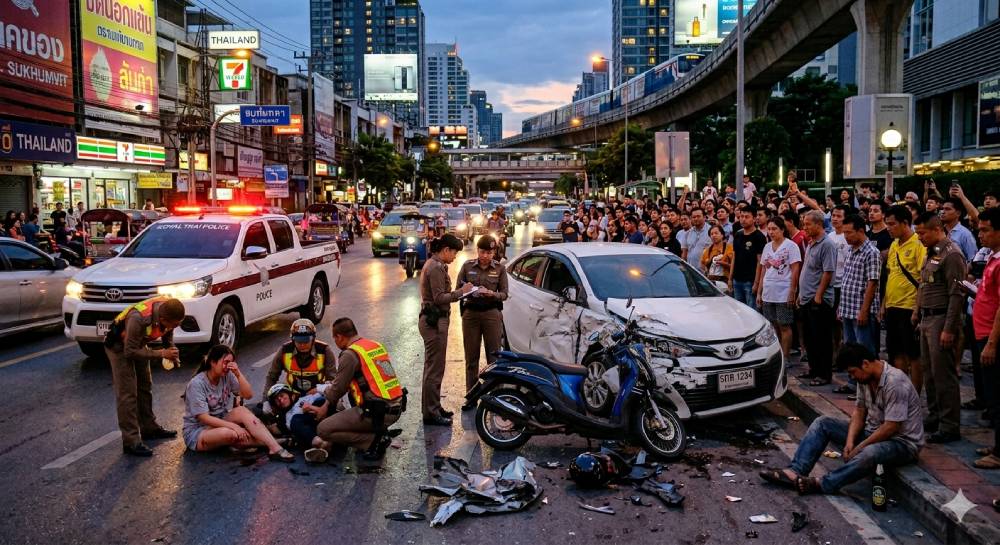
Furthermore, if the victim is a Thai citizen, you'll likely be required to pay a one-time compensation payment or be forced to cover their hospital bills. Incidentally, Thais always "demand" this compensation from foreigners in any accident, even if the driver was sober. And this isn't entirely legal. If you're driving a car, the insurance company covers all expenses for the other parties involved, so this compensation isn't necessary, but the police usually side with the victim and literally help extort money. Motorbikes aren't insured, so you'll have to pay in any case.
A life hack that won't work: If this is your first arrest and you've been polite, the court will likely replace your actual prison sentence with a suspended one. However, you'll have to pay the full fine, and you'll also be required to report to the probation department and complete community service hours (like painting curbs or picking up trash).
Can they deport me?
Armchair experts often repeat the same phrase on forums and social media: breaking the law in Thailand will get you deported. But in reality, to actually be deported, you'd have to screw up pretty badly. If you're caught for the first time, you were polite, didn't fight the police, and didn't get into any accidents, you'll be released after a court hearing and paying a fine. Your visa won't be revoked, but your information will be added to a database. However, if you want to travel in the future to a country that requires a police clearance certificate for a visa, you'll likely be denied. This is important for those who live in Thailand permanently.
But when the situation becomes critical:
You can't pay the fine. Welcome to a real Thai prison, where you'll "sit" for your fine at a fixed daily rate. After that, deportation is guaranteed.
Repeat offense or criminal conviction. If you're caught a second time or cause injury to others in an accident, the matter becomes serious. After you serve your sentence (suspended or actual), immigration police will revoke your visa (if you have one).
Blacklist. Deportation is at your own expense. You're taken to the Immigration Detention Center in Bangkok (IDC), where conditions are, to put it mildly, spartan, and held there until you or your relatives purchase a ticket. After that, you're stamped deportation and banned from entering Thailand for 5-10 years or rest of your life.
You won't be able to exchange your passport for a new one and return, as fingerprints are currently taken upon entry, and you can't change them. Furthermore, a criminal record in Thailand can create problems with future visas and entry into some countries.
Will the insurance be valid?
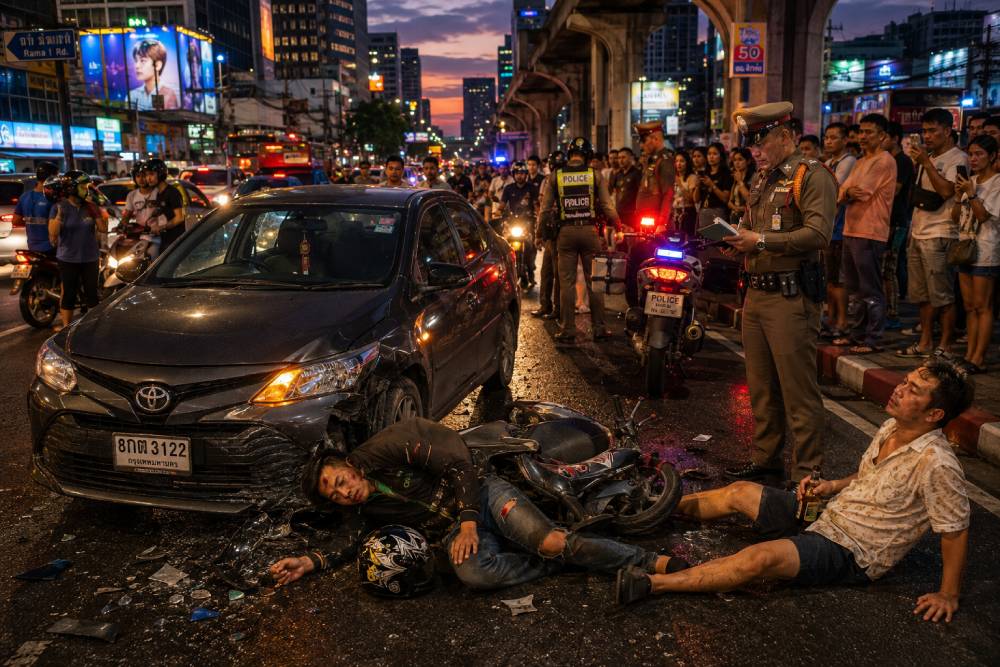
No travel insurance or rental car insurance (motorbikes are not covered) will cover a drunk driver. All medical expenses for yourself, the injured, and repairs to the local Thai driver's wrecked Lexus will be borne solely by you.
If you're in Thailand and planning to get even a glass of beer or a cocktail, it's best to avoid driving a motorbike or car. A fine of several thousand baht is far from the worst-case scenario. Far more serious is the risk of killing someone, getting charged, going to jail, losing your insurance, or having problems renewing your visa. Therefore, you should think twice about whether a taxi is really that expensive compared to the price you'll pay for violating traffic rules and causing harm to someone. Of course, you might get lucky and avoid being caught by the police, but if you knew where you'd fall... And drunk driving is already attempted murder.