
If you're planning to hire a motorbike or a car in Thailand, it's important to remember: local roads are very different from those in Europe. There are their own rules, habits, and traffic patterns. This is especially true on popular tourist islands like Phuket and Koh Samui, where the roads are crowded with tourists, locals, taxis, motorbikes, and sometimes even animals. To ensure a safe and hassle-free trip, this article is a must-read.
Thai roads are a unique art form (and adrenaline rush). They have their own unspoken rules that can initially come as a shock to Western tourists. To prevent your vacation on some paradise island from turning into a survival quest and dealing with the local police, here's a list of things you absolutely shouldn't do while driving in Thailand.
How to Drive Safely in Thailand
Do not drive into the right lane (automatic)
In Thailand, driving is on the left. It might seem obvious, but our brains are tricky. During the first few days, especially when exiting a parking lot or on an empty road somewhere in the wilderness of Koh Samui, you might automatically swerve into the oncoming right lane. Always keep in mind the phrase: "Keep left." For tips on how to get used to it faster, read here.
Don't think that flashing your headlights means "I'm skipping"
In the CIS and Europe, if a car ahead or behind you flashes its high beams, it means, "Go ahead, buddy, I'm yielding." In Thailand, it's the exact opposite! If someone flashes their headlights at you, it's a cry from the heart: "Move over, give way, I'm speeding and not slowing down!" Remember this to avoid a head-on collision. However, if you're standing at an intersection and someone flashes their headlights, this gesture still means "I'm letting you pass."
Don't drive without an IDP (International Driving Permit)
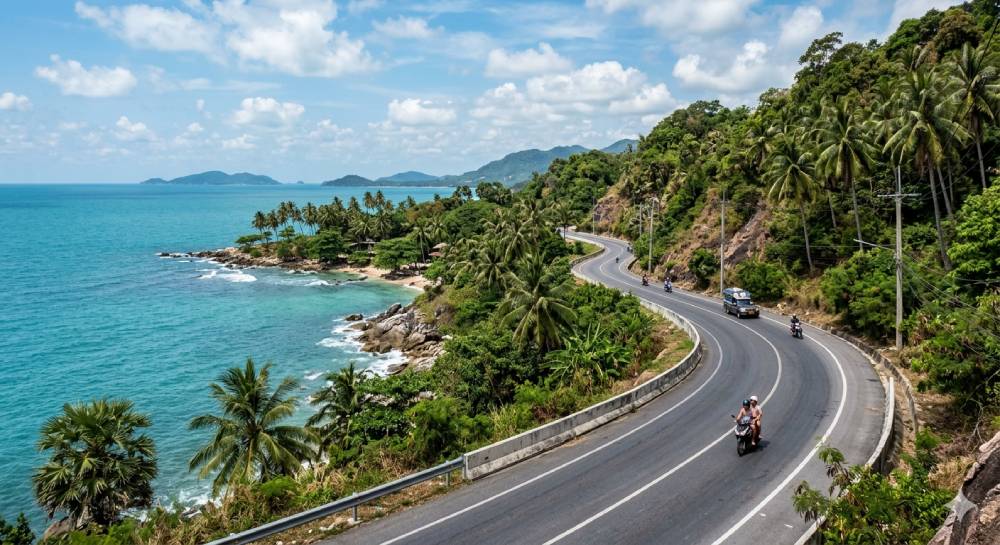
A regular plastic license from your country won't work here, even if it says "Permis de conduire" (permit for conduire) on it. You need an international driver license (IDP) booklet (category A for a motorcycle and category B for a car). Roadside raids are a regular occurrence. For example, the popular Phuket is literally dotted with police checkpoints (especially in the Patong and Rawai areas), where tourists without the required category are subject to strict fines.
Don't ignore your helmet when riding a motorbike (even if it's "a 5-minute ride")
Riding without a helmet is a classic rookie mistake. Firstly, it's the main reason for a fine at any police checkpoint. Secondly, the serpentine roads and sandbanks are unforgiving. On Koh Samui, for example, the roads are narrow, often with gravel along the edges- you could go flying in no time. Protect your head; a helmet isn't just a "yuck, that's crap"- it's stylish and safe. In Thailand, the majority of serious tourist injuries are related to riding bikes without protection. And if you don't have a Category A IDP, your insurance is simply a piece of paper. All medical expenses are your responsibility. Healthcare in the country is very expensive.
Don't trust other transport turn signals
If the Thai driver in front of you turns on their left turn signal, especially on a scooter, that doesn't guarantee they'll turn left. They could:
* Turn right.
* Go straight.
* Forgetting to turn it off since the last kilometer.
It's a common occurrence for motorcyclists. They forget to turn off their turn signals after a previous maneuver, thereby misleading other road users and causing accidents.
Rule of Thai roads: Always wait for a real maneuver, and don’t trust the lights on other people’s vehicles.
Don't drive after "just one cocktail"
Yes, Thailand is relaxing, and it seems like a place of pure relaxation. But the rules for drunk driving are strict. If you're caught with a blood alcohol level above the legal limit (0.05 mg/ml), you face a hefty fine, a day (or even longer) in a Thai jail, and deportation. Do you really need that?
Don't honk
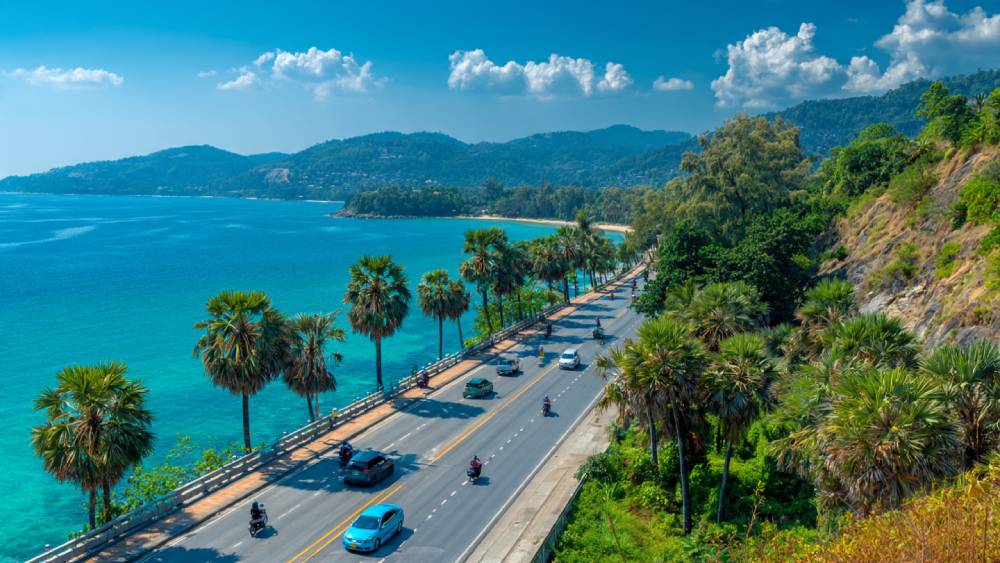
In the land of smiles, honking is a way of saying, "Hello, I'm here, be careful." But if you start honking long and hard, aggressively, and swearing, the locals won't understand. Horns aren't generally accepted in Thailand. Even if a KAMAZ truck is coming at you head-on, you just silently maneuver to avoid a collision. I don't know what would happen to make a local driver to honk.
This is because, for locals, it's crucial not to lose face. If you honk, you're pointing out someone else's mistake, and it's you who loses face, not the person who screwed up. All Thais adhere to the Grenjai philosophy, not only on the roads but in every aspect of life. Thais are generally non-confrontational, but displays of "road rage" can irritate them. Respect the culture of "Sabai-Sabai" (living in pleasure without fuss).
Do not ride a scooter during or immediately after rain.
A tropical downpour turns Thai asphalt, heated to 35°C, into a veritable skating rink. This is because an invisible film of oil, dust, and tire residue accumulates on the roads. When it starts to rain, this mixture turns into soap. At this point, your bike's brakes simply fail. Slow down or wait out the downpour at a nearby cafe.
Don't forget about the "road kamikazes"
We're talking about street dogs (sabaiks) and cats. In Thailand, they feel like full-fledged road users. A dog might lie down in the middle of a busy highway and not even bat an eye at you. Drive around them very carefully and keep a wide berth—they might jump up suddenly.
Don't plug into your phone while on the go
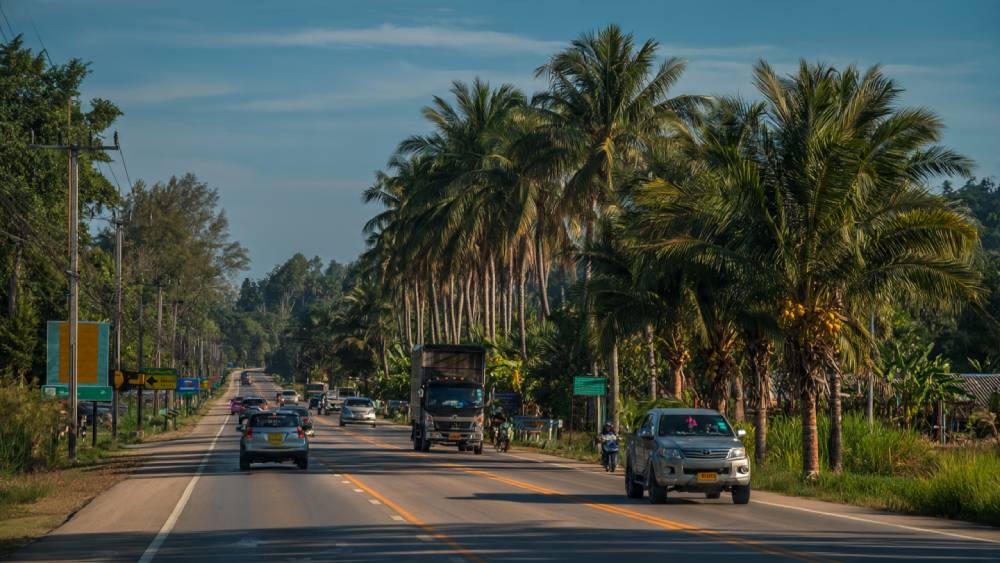
It seems trivial, but in Phuket and other resorts, you see this every minute: a tourist steering with one hand, holding a GPS with the other, searching for the way to the beach. Traffic is chaotic, lanes are narrow, and at any second a fellow Russian on a motorbike can appear around the corner. Need to check the map? Pull over to the side of the road—it takes half a minute but will save your health. Or use a smartphone holder and set your route in advance.
Don't exceed the speed limit
Many roads are equipped with speed cameras, and police conduct regular inspections. Besides the fines, high speeds are dangerous due to the large number of motorbikes and unexpected obstacles on the road. Even if the road seems empty, it's best to obey the speed limits.
Don't expect everyone to follow traffic rules.
There's an unspoken rule on Thai roads: always expect the unexpected. A bike might suddenly change lanes, a car might stop without warning, a truck loaded with coconuts might swerve into oncoming traffic, a speed bump or a hole might suddenly appear on smooth pavement, or a dog might run out onto the road anywhere. The more attentive you are, the safer your trip will be.
Don't park anywhere
Parking illegally can result in a fine or towing. Pay attention to parking signs near beaches, markets, and tourist streets. Avoid taxi stands in particular, as they can damage your vehicle. Spending a few extra minutes looking for parking is better than wasting time and money on resolving problems.
Don't carry documents with you
There's a myth floating around online that you should always carry your passport. This isn't necessary. The traffic police are much more interested in checking your driver's license, while immigration handles your passport. You could lose it, which happens quite often, and you'd have to go to Bangkok to get it, ruining your vacation. If you still feel more comfortable carrying all your documents, make a copy or take a photo.
Don't overestimate your driving skills
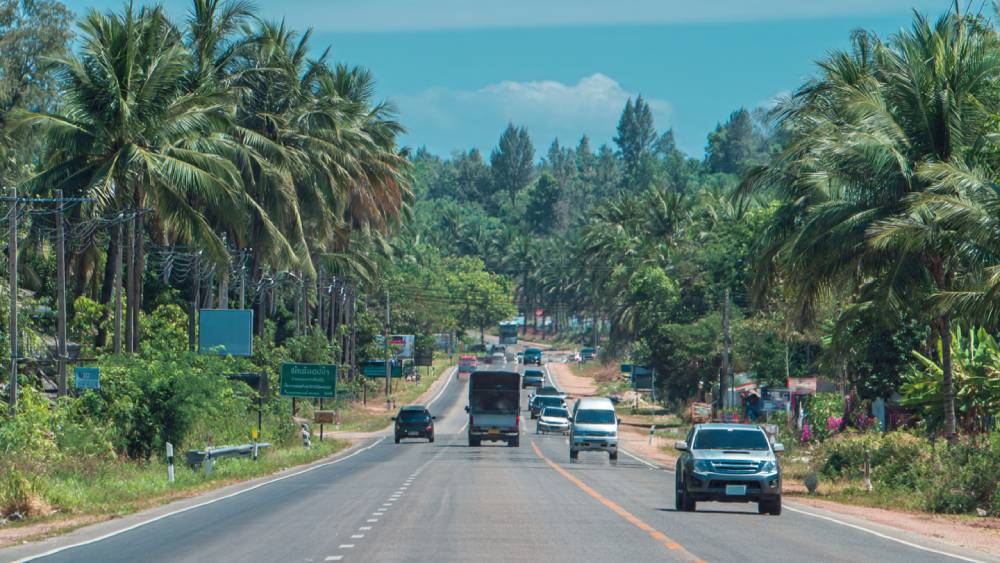
The most dangerous mistake is the belief that "nothing will happen to me." Unfamiliar roads, a different driving style, and a large number of vehicles require maximum concentration. Driving calmly is always better than risking a few minutes. Don't look at the Thais. They navigate the local traffic chaos perfectly because they live in it every day. Tourists shouldn't imitate their maneuvers, sudden lane changes, and overtaking. It's better to drive slower than to search for the nearest hospital.
The roads in Thailand are a joy and a freedom if you approach them wisely, with a cool head and mutual respect for local drivers. They may seem chaotic only at first glance. If you follow the rules, pay attention, and take your time, driving will only bring positive emotions. Whether you're vacationing in Phuket, exploring Koh Samui, or traveling on the mainland, driving safety should remain a top priority. The key is to remember that you're in a foreign country with its own unique driving conditions. With a little caution, common sense, and patience, your trip will be hassle-free.