
You've arrived in a tropical paradise. Palm trees, a warm sea, stunning tom yum... and absolutely crazy traffic, and even in the wrong direction. If you decide to hire a car, you'll notice a huge number of scooters on your very first day, appearing literally out of nowhere. They overtake from the left, from the right, squeezing within millimeters of your mirrors, and darting out from the side of the road. And sooner or later, a chilling question arises in the mind of any driver in Phuket or Koh Samui: "What happens if we collide? Who will pay?" Surely, while researching the country before your trip, you've read a bunch of myths and horror stories about how in Thailand the farang (foreigner) is always to blame for everything. In this article, we'll dispel a few of them.
Myth #1: In a traffic accident, a foreigner is always at fault.
There's a persistent myth among tourists: if there's an accident involving a local and a visitor, the police will automatically blame the foreigner. After all, "they have the money." Of course, this is a myth. Thai police will investigate each accident individually and rely on traffic laws, not your citizenship or the size of your wallet. If a local on a scooter runs a red light or swerves into oncoming traffic and crashes into your rental or personal car, they'll be at fault.
Myth #2: The car is bigger, so it's always at fault.
There are millions of motorcycles on Thai roads. They can suddenly change lanes, weave between lanes, exit secondary roads, or even drive in the oncoming lane. If an accident occurs, the police don't simply determine who's at fault based on the principle of "whoever has the biggest vehicle is at fault." They investigate the circumstances of the accident and, if necessary, review CCTV footage, as is the case in most countries. So this is another common misconception.
Imagine: you're carefully driving along a winding road in Koh Samui, or stuck in a dead-end evening traffic jam somewhere in Patong, Phuket, when a careless motorbike hits your rear bumper at full speed, or a motorcyclist scrapes your car while trying to squeeze between lanes, or runs a red light at an intersection. Who's at fault? Legally, it's the one who wasn't keeping their distance and obeying traffic rules-that is, the motorbike driver. A car won't be held responsible simply because it has four wheels. Driving in Thailand, you should never relax or completely trust other road users. You need to be constantly vigilant and expect unpredictable behavior from motorbikes.
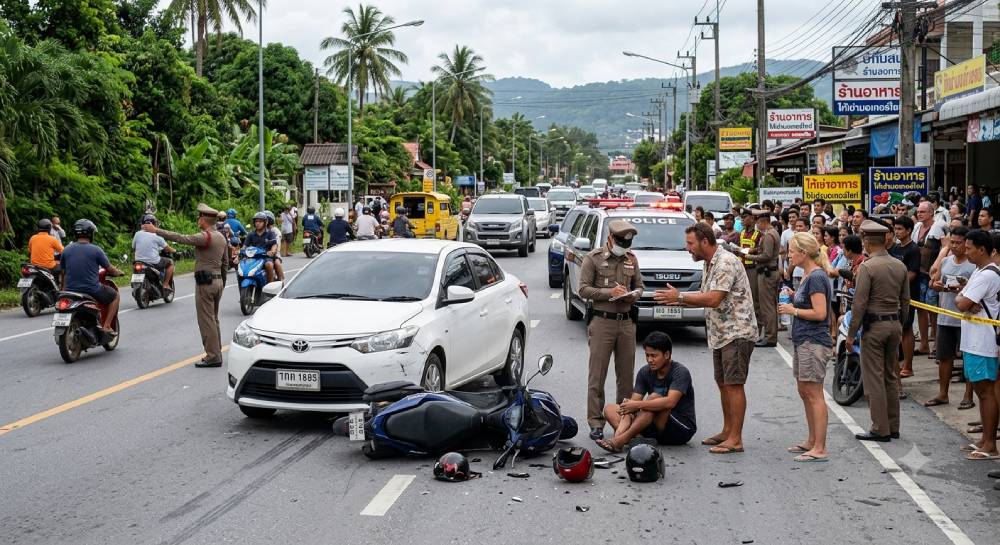
How do police decide who is to blame?
Thai roads aren't the Wild West, although sometimes it feels that way. Compared to the quiet roads of Europe where people are terrified of breaking traffic rules, local driving style seems like complete chaos. Everyone drives wherever and however they want, the police only show up when they need to collect fines for not wearing helmets and not having a driver license, and the rest of the time, no one enforces the rules. Sometimes you think they're only remembered during the driving test, and of course, if there's an accident.
What to do if an accident does occur?
Even the most careful driver isn't immune to accidents. If a scooter hits your car (or vice versa), the following steps should be taken:
* Stop and do not move your vehicles. Unless it's a highway and you're completely blocking all traffic, leave your vehicles as they are until the police or insurance agent arrives.
* Take plenty of photos and videos. Capture general shots of the road, wheel alignment, braking distances, damage, and the license plate (if any) of the other party. The entire accident scene should be documented.
* Remain calm. No yelling or aggression. In Thai culture, losing face (a public display of anger) is the worst thing that can happen to you. Smile and be polite, even if you're shaking with anger or tension.
* Call your rental company or insurance company. You should find out what to do in the event of an accident before renting a car. An insurance representative will come to the scene, ask you to describe the incident, and fill out the necessary paperwork. The agent will likely not speak English, and you'll need an online translator, or your rental company's representative will communicate with the agent, the police, and the other party.
* Don't pay anything on the spot. Often, the guilty side (especially if it's a local on a bike without insurance) will offer to "sort it out on the spot" and give you a couple thousand baht. Don't agree until you've spoken to your insurance company and the rental company. If you're at fault, your liability will be governed by the rental agreement. If you're not at fault, you won't pay anything.
The investigation typically takes anywhere from an hour to several hours, depending on traffic (the insurance agent may take a long time to get to the scene of the accident) and any disputed points in determining who is at fault. Please be patient.
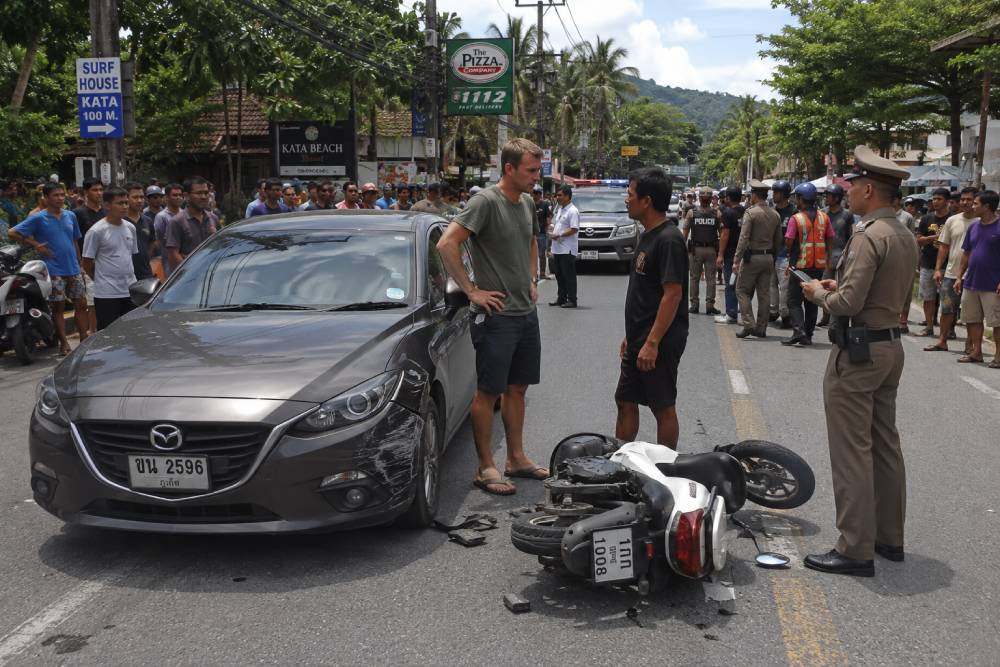
How to reduce the risk of an accident
There are a few simple rules that really work:
* keep a greater distance than usual;
* always check your mirrors twice before turning, don’t forget about blind spots;
* do not open the door immediately after stopping, check in the mirrors, or better yet, look with your eyes to make sure that the area nearby is empty;
* reduce speed near markets, schools and intersections;
* always expect that the bike may make an unexpected maneuver;
* do not trust turn signals - the motorbike driver may forget to turn it off after completing the previous maneuver;
After a few days of driving, you'll begin to understand the local rhythm of traffic and your journeys will become much more relaxed.
What if the driver of the car is a foreigner, and a motorbike rider is Thai?
This is another popular myth among tourists. Many believe that if a foreigner in a car and a local on a scooter are involved in an accident, the police will automatically side with the Thai.
In fact, everything is not so clear-cut.
Yes, the language barrier and unfamiliarity with local laws can create the perception that tourists are at a disadvantage. But nationality alone doesn't make someone guilty. The police examine the circumstances of the accident: the accident diagram, skid marks, dashcam and CCTV footage, and witness and participant statements. If the motorbike driver is at fault, they will be found guilty, even if they are a Thai citizen. It's important to understand that arguing with the police, raising your voice, or trying to prove your case with emotion is a bad idea. It's much better to cooperate calmly, provide documents, and immediately contact your insurance company or rental agency. That's why, when hiring a car in Phuket or Koh Samui, and other tourist areas, choose reputable companies that offer the fullest coverage.
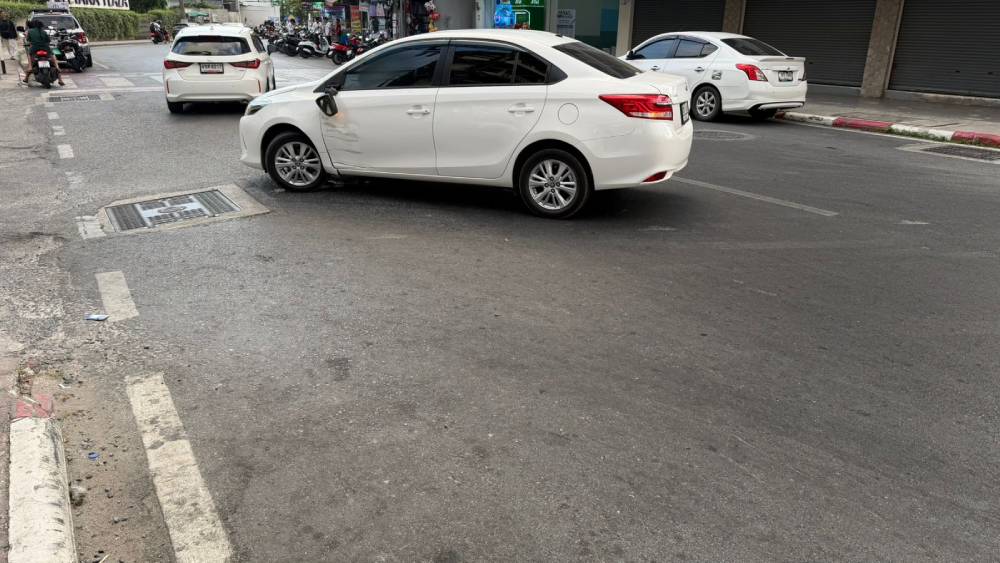
If you're found guilty, the insurance company will cover all expenses for the scooter driver, including vehicle repairs and any medical bills. This is legal. However, according to unspoken rules, you'll be responsible for personally paying compensation to the injured party. This is illegal, and the police will side with the Thai driver, but it's better for you to pay than to get into trouble in a foreign country. Typically, this ranges from 2,000 to 5,000 baht, depending on the severity of the situation.
What if the driver of the car is Thai and a motorbike driver is a foreigner?
In this case, too, there's no rule that automatically presumes the farang at fault. If the driver violated traffic rules- for example, by failing to yield, driving into oncoming traffic, or running a red light- they may be found at fault in the accident, even if the scooter was driven by a tourist. The police evaluate not the nationality of the participants, but the circumstances of the accident and the available evidence.
However, it's important for foreigners to remember a few nuances. If you don't speak English or Thai well, be sure to ask a translator or a rental company representative for assistance when communicating with the police and insurance company. Don't sign documents whose contents you don't understand.
Important!
*Motorbikes are not covered by comprehensive insurance. The driver is solely responsible for any financial losses.
*You must have an IDP, a Thai driver license, or a national driver license with category A. If you don't have one, even if you're not at fault, you'll be considered at fault. You'll pay twice: to the other party involved in the incident and to the owner of the rental scooter. The amount of your liability should be specified in the rental agreement. If you're lucky enough to have the correct driver license and are not at fault, you won't have to pay the third party, but you most likely will. This depends on the rental terms.
Never leave your passport as collateral, so the vehicle owner can't manipulate you in any disputes. After all, you'll agree to anything to get your document back.
If you were wearing a helmet, had a valid driver license of the appropriate category, obeyed traffic rules, and can support your case with photographs, video, or witness testimony, your chances of a fair trial are significantly higher. The main thing is not to assume that the decision will be in favor of the Thai citizen just because they are a local resident. As in any country, the outcome of the case depends primarily on who violated the rules and the evidence available to each party.
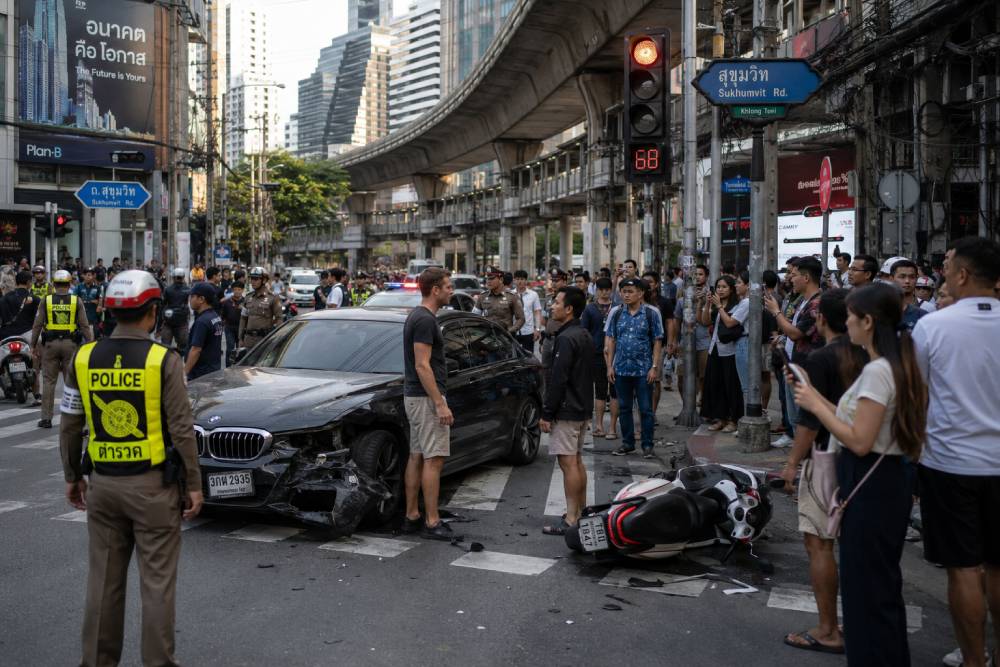
Driving in Thailand is comfortable and safe if you obey traffic rules, don't speed, have good insurance (ideally, first-class, covering any damage), a dashcam, and a little Buddhist serenity. Don't be afraid of Thai roads: just be predictable behind the wheel, check your mirrors often, and remember that the right is always on the side of those who obey the rules!
A collision between a car and a motorcycle doesn't mean the driver is at fault. Fault is determined based on the circumstances of the specific accident. However, due to the large number of motorcycles on the roads of Phuket and Koh Samui, attentiveness and a calm driving style are the best defense against accidents.
The most valuable advice for those driving for the first time in Thailand is simple: drive as if there are dozens of bikes around you that you haven't noticed yet. Quite often, that's exactly the case.