
Traveling by car in Thailand is absolute freedom: you can drive to a secret beach, venture deep into tropical jungles, or comfortably reach a viewpoint without depending on taxis and excursions. However, the main question worrying most tourists planning to rent a car in Thailand is the security deposit. International chain rental companies block substantial amounts on credit cards, which are then returned weeks later. Cash refunds happen much faster-on the same day-but do not reduce the level of stress. Everyone fears that the deposit won't be returned at all.
Is it possible to do without it? Let's figure out how rental without a deposit works, where to look for such offers, and what pitfalls you might encounter.
Deposit -free car rental: possible or not?
The complete absence of a deposit is not a myth. Finding such options is possible, but the most important thing is to check all the rental terms, as they may differ from standard ones. Such companies offer to arrange an expanded full-coverage insurance policy, which completely eliminates the deposit. However, these offers usually apply to rentals starting from a week and significantly increase the daily rental cost. Deposit-free options can be found both at chain companies and private car rental businesses in Phuket or Samui.
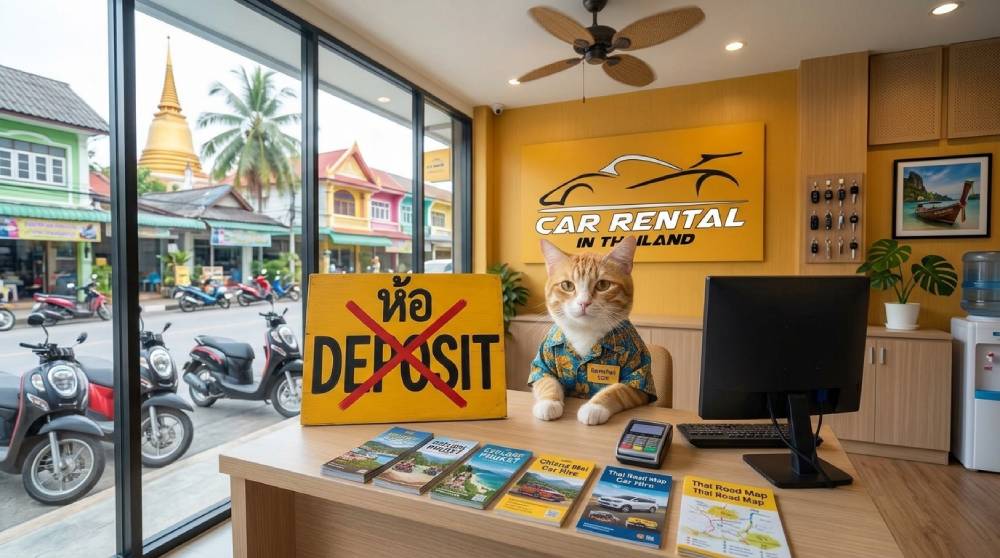
What are my risks?
Renting without a deposit sounds attractive, but behind it lie nuances that are important to know in advance:
1. Insurance coverage limitations.
Basic terms often do not cover damage to tires, wheel rims, windows (for example, from a flying pebble), or the interior. Always read the exceptions clause in the contract. This means you will still have to pay.
2. Lack of an International Driving Permit (IDP).
If you only have your national driver's license with you, in the event of an accident, the Thai insurance company has the full right to refuse payment. In this case, the absence of a deposit will not protect you from heavy repair costs.
3. Risk of "shady" street agencies.
Trying to save money and find a car through the cheapest ads or agreeing to a rental without an official contract, you risk running into an unpleasant surprise when returning the vehicle. Unscrupulous companies may try to pin old scratches on you. Always take a video of the car from all angles before getting behind the wheel.
4. And the biggest risk.
Vehicle owners cannot simply trust their expensive property to the first person they meet. Some guarantee is needed that the renter will not crash it and run away, because since there is no deposit, they have nothing to lose. In such cases, instead of money deposit, they ask you to leave your passport. The tourist agrees, and that's when the most interesting part begins. The owner's hands are now completely untied. Your document is with them, without a passport you won't be able to fly back home, and you will agree to anything. If they tell you to pay for old damage, you will have to pay. Yes, you can contact the tourist police, but the investigation will take a lot of time, and if you are dropping off the car at the airport and time is limited, police are out of the question.
Pros of a deposit
The deposit is often perceived by tourists as an extra risk or a total loss of money. However, in official and transparent rentals, it is a tool for protecting both parties. If you book a car through licensed companies or large aggregators, having a deposit brings a number of advantages:
* Lower and more favorable daily cost. The deposit-free option almost always includes the cost of expensive extended insurance, making the rental price much higher. Choosing the classic option with a deposit means you only pay for the actual rental days without overpaying for extra options.
* Newer cars and a better fleet. Rental companies trust clients who agree to a standard deposit. As a rule, such fleets consist of fresh cars with minimal mileage and regular maintenance. There are many more options, and you can choose the one that suits you best.
* Clear and transparent rules. The transaction is regulated by an official contract. You know precisely the maximum amount of your liability in the event of an accident. Usually, it equals the deposit amount, and even if the damage is higher, you only risk the deposit. And if you are not at fault in the accident, you risk nothing at all.
* Day-of booking availability. Cars with a "no deposit" condition are snapped up first, and their choice is severely limited. With a deposit, the choice of models (from compact sedans to powerful crossovers) is always significantly wider. And you can bargain to get a better price.
What is important to know
1. The deposit is refunded in full. If you return the car with the same fuel level, without new damage, and were not in an accident, you will get your money back immediately for cash payments, or unblocked on your card within the timeframe established by the bank.
2. The amount is always stated in the contract. Along with the method it was paid: cash and in what currency, by card, or via bank transfer.
3. Condition documentation at pickup. To eliminate any disputed moments, a joint inspection of the car is carried out before signing the contract. All scratches, dents, and the fuel level are recorded in photos, videos, and in the contract. You only pay for what you actually damaged yourself.
4. Protection against minor hitches. The deposit can be used to pay for rental extensions if you decide to extend the rental period during the process, or have the cost of car washing and an incomplete tank of gasoline deducted, saving you from long disputes and searching for payment options on the spot.
Main advice: Arrange rentals through trusted services and large companies with good reviews, read the contract carefully before signing, and keep the deposit refund receipts. In this case, the deposit becomes a regular formal step rather than a cause for concern.
Deposit payment methods
Three main methods are used to make a deposit when renting a car in Thailand. The choice depends on where you book the car- at international chain rentals or local companies.
- Cash (in Thai baht, USD, EUR)
The most popular and convenient option when renting through local companies and aggregators.
Upon receiving the car, you hand a fixed amount of cash (usually from 3,000 to 10,000 baht) to the rental representative. The contract must include a record of receiving the deposit, the amount, and the currency. Upon returning the car, the money is returned to you on the spot in the same form it was received. If you paid in baht, you will get baht back; if in dollars, it will be refunded in US$, accordingly. Alternatively, you can negotiate separate terms with the rental agency.
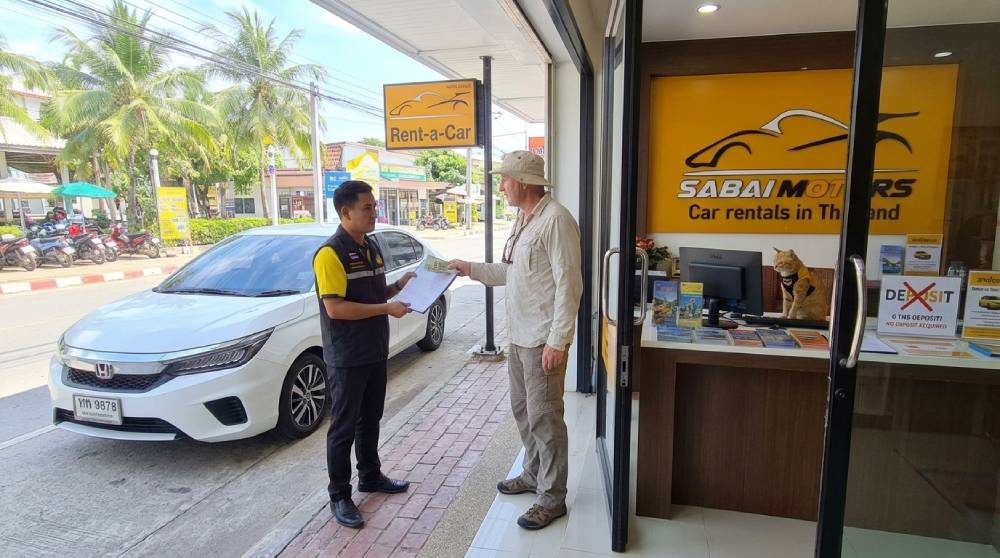
Pros of cash:
* Absolute transparency: you get your money back second by second at the moment of car drop-off.
* No dependence on bank cards, transaction delays, and currency conversions.
Cons:
* You need to have the required amount of cash with you on the first day of the trip. Not all companies accept dollars or euros; this needs to be checked in advance.
* Check that the deposit amount is clearly written in the contract. You can ask an employee to take a picture of the money- the form in which it was received.
- Credit card
The standard and only possible method for international chain brands (Avis, Hertz, Budget, etc.).
An amount is blocked on your credit card (usually 5,000-15,000 baht). The money is not debited, but merely "frozen" by the bank for the duration of the rental.
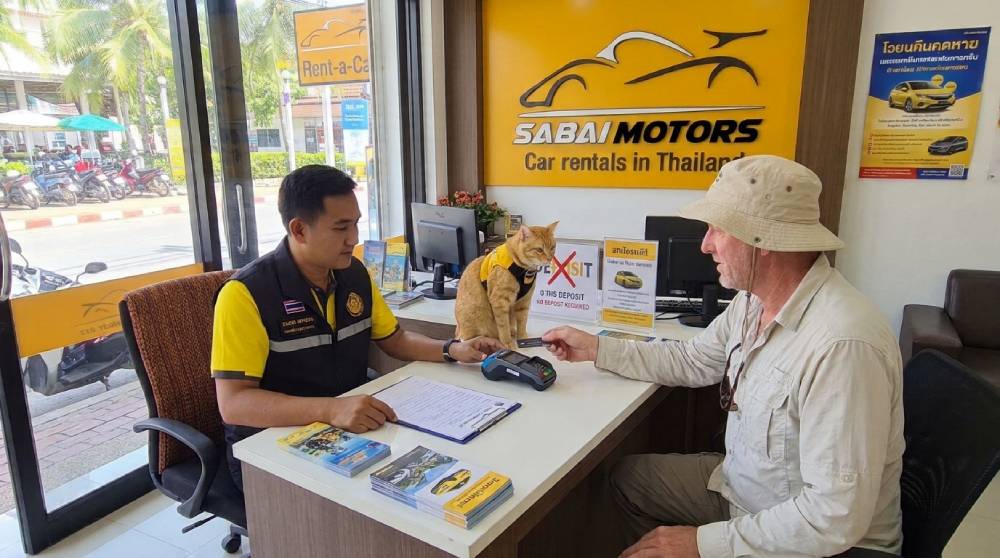
Pros:
* No need to have cash.
* Official banking financial transaction with an authorization receipt.
Cons:
* Unblocking funds after a car return can take from 7 to 30 days depending on the issuing bank.
* Traditional debit or prepaid cards are often not accepted by chain companies.
* The card must be issued strictly in the name of the main driver specified in the contract.
- Your home country's debit card
An alternative option found with some aggregators and private local rentals.
The deposit is made via a payment bank terminal to a Thai bank account. That is, it's a regular money transfer to the car owner's account- as if you bought something in a store. Usually, the deposit amount is added to the total rental cost and paid at once in a single payment.
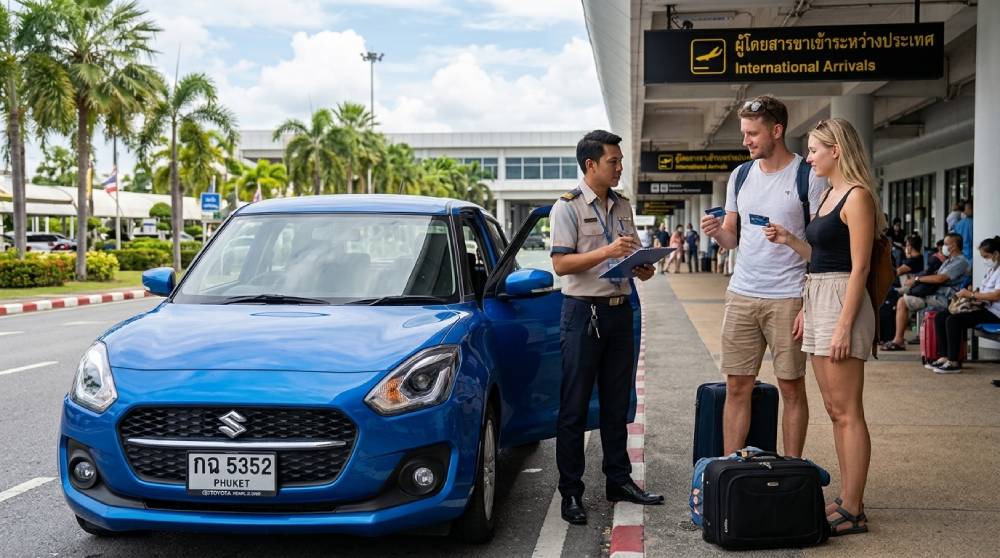
Pros:
* Convenient if you don't have a credit card or cash on hand.
Cons:
* When returning funds to a foreign debit card due to exchange rate differences, you may lose a small amount on double conversion.
* Most rentals refund money only in cash (Thai baht).
* There are bank terminals that accept only Visa and Mastercard cards. If you have another system, check with the rental agency in advance about the possibility of paying this way.
- Less common options:
Cryptocurrency, direct transfer to a Thai bank if you also have an account in a local bank, payment through payment systems PayPal, Wise, Stripe, and others. All this needs to be clarified in advance with the rental company.
Useful facts about hiring a car in Thailand
* Left-hand traffic. Thailand inherited British driving traditions, so the steering wheel is on the right here, and driving is on the left side. You get used to this specificity on the very first day, but maximum concentration is required at first.
* Passport as a deposit- taboo. Reliable companies never take your original passport as a guarantee. To conclude a contract, a regular copy is sufficient, and you present the original only for visual verification. If you are asked to leave your foreign passport, find another rental.
* Traffic police and checkpoints. On popular routes, for example, in Phuket around Patong, document checks are regularly carried out. Fines for unbuckled seatbelts, speeding, and improper parking are fixed and in most cases paid at the police station immediately after receipt. Speeding tickets usually arrive by mail to the owner a month after the violation, and since you will most likely have left Thailand by then, the owner has every right to contact you and ask you to pay the fine.
* Navigation and communication. Cellular operators offer inexpensive tourist SIM cards with unlimited internet. Regular mobile maps (Google Maps, Maps.me) work perfectly and accurately suggest routes even at complex interchanges. A SIM card can be bought at the airport, at any 7-Eleven, a phone sales booth, or an operator's office. There should be no problems with this.