
If you're heading to Thailand and deciding between Phuket and Koh Samui, one of the most important decisions you'll have to make is how to get around. Both islands are beautiful, but the transportation situation is radically different. Let's figure out where it's best to rent a car and where you can relax and take a taxi or public transportation without breaking the bank.
At first glance, it seems like you can easily explore the island on foot or, at worst, take a taxi. But both islands are just that-islands in name only. In reality, they are full-fledged cities with large roads and significant distances. Once you start driving to beaches, cafes, markets, waterfalls, and observation decks, you suddenly realize that several trips a day can eat up a significant portion of your budget. Public transportation at these resorts is practically nonexistent.
So where is it more profitable to rent a car, and where is it easier to open a Grab and not worry about parking?
Phuket: a large island with lots of traffic and congestion
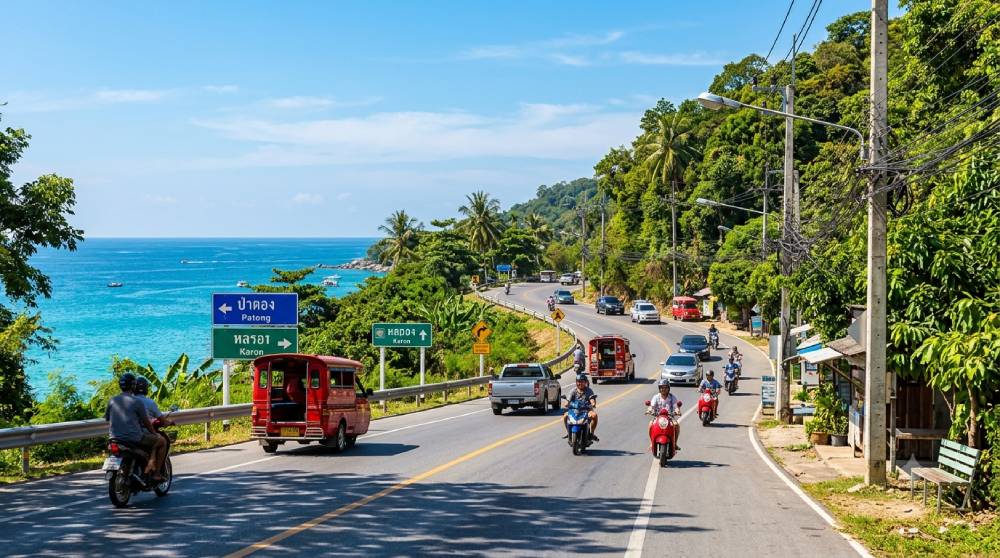
Its area is approximately 543 square kilometers. The main tourist areas are located at a significant distance from each other and separated by mountain ranges: Patong, Karon, Kata, Rawai, Bang Tao, Kamala, Phuket Town, and so on. And here's where things get interesting. If you're staying in Kata, for example, and want to go to Patong in the evening and Bang Tao the next day, the distances become significant. A single taxi ride can cost several hundred baht. And if you have four or five such trips a day, the cost starts to add up.
How much does it cost to hire a car in Phuket?
In 2026, small city cars like Honda Jazz, Toyota Vios, and Toyota Ativ can be found from local rental companies for 600-1,200 baht per day, depending on the rental period (the longer the better) and the season. Larger cars and crossovers are more expensive.
For example:
- small car - 600-1200 baht/day;
- crossover - approximately 1150-1800 baht;
- large SUV - from 2000 baht.
You'll also need to pay for gas and a deposit, which will be returned if you drive safely. The deposit is typically 3,000-20,000 baht, depending on the car class. Don't just choose the lowest price. Before renting, be sure to check what insurance is included, the deductible, and the deposit amount.
How much does a taxi cost?
Phuket's taxi situation is interesting. There are metered taxis, private transfers, and tuk-tuks. Several apps operate-Grab, Bolt, In-drive-and prices vary significantly. Apps are generally cheaper. According to current estimates from 2026, a short, short trip can cost around 200 baht, while longer routes can cost up to 1,000-1,500 baht. Bolt is often cheaper than Grab, but availability varies by area and time of day.
For example:
- Bangtao → Patong - about 700 baht;
- Patong → Kata - about 300 baht through the application;
- Patong → Phuket Town - 400-500 baht;
- Rawai → airport - 800-1000 baht;
- travel between remote areas - 600 baht or more.
Prices can fluctuate significantly during rain, evenings, peak season, and peak demand. That's why it's so convenient to use Grab, Bolt, and In-drive in Phuket and compare prices before your trip. Taxi and tuk-tuk prices will be higher, accordingly.
There's a very important caveat. It's usually very difficult to order a taxi through an app for pickup or dropoff at popular tourist spots, such as the airport or Wat Chalong. These areas are controlled by taxi mafia groups that don't allow private drivers to pick up passengers. Drivers either refuse the request or suggest moving away about 100 meters to safely pick up the passenger.
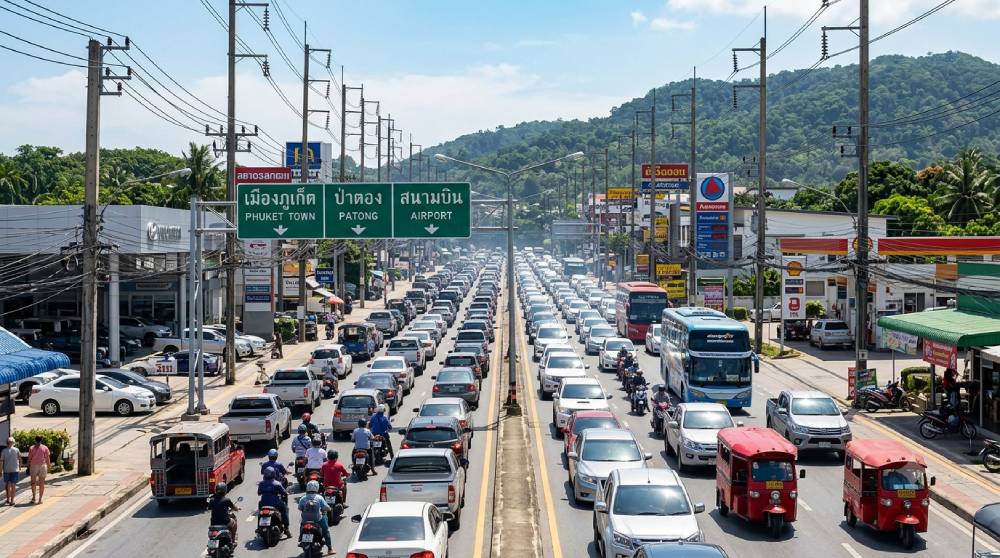
Phuket's main drawback is traffic jams. This is where driving has its downside. Phuket is being actively developed, there are many tourists, and the number of main roads is limited. The island's authorities specifically note problems with traffic flow and congestion, especially between the airport and the city. So, the situation is quite similar: a car sits in traffic for 40 minutes, and a taxi also sits in traffic for 40 minutes. So, renting a car doesn't mean you'll suddenly get everywhere faster. But a car has another advantage: freedom. Tired of sitting in traffic, quickly change your route. See a beautiful viewpoint? Stop. Want to go to a different beach? Go. Decided to stop at the supermarket in the evening, then at a restaurant, and then at the night market? No need to rely on the number of available drivers and overpay at a high rate.
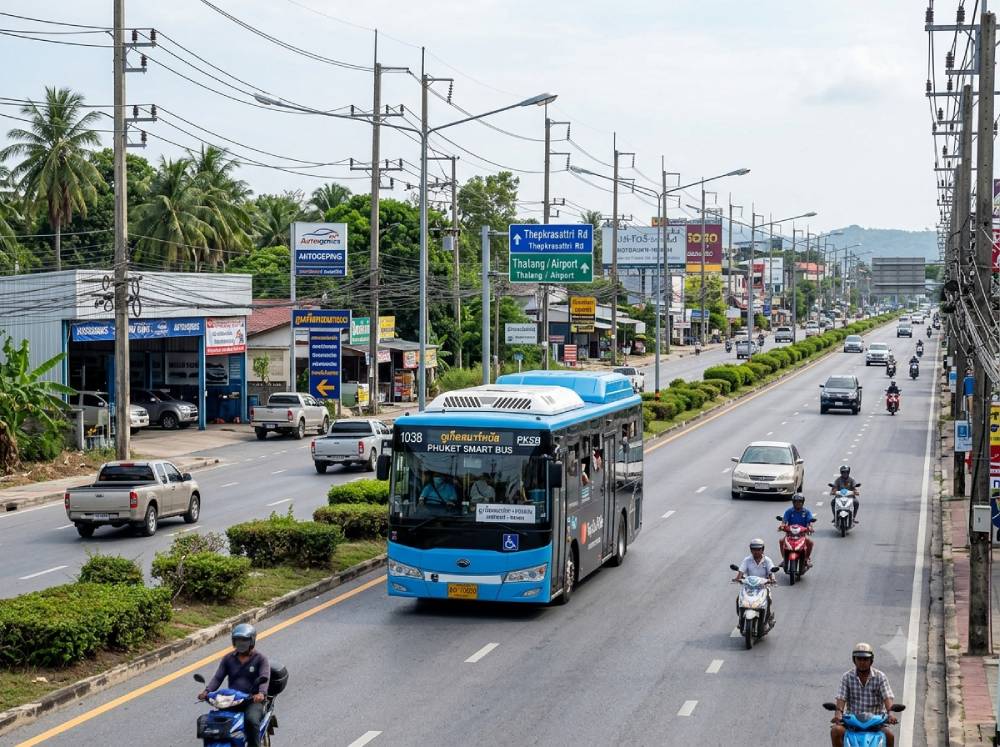
It's worth noting that Phuket has a modern, air-conditioned bus. It departs from the airport and travels along the entire island between the main beaches, ending in Rawai. The fare is very reasonable-100 baht. There are some downsides, of course:
- schedule
- only follows the designated route. So, if your hotel is located further from the road, you'll have to walk.
- It's very slow. It can take 2-3 hours each way. If you have unlimited time, this is the option for you.
Schedules and routes can be found on the official Smart bus Phuket website.
Samui: A car is a necessity here
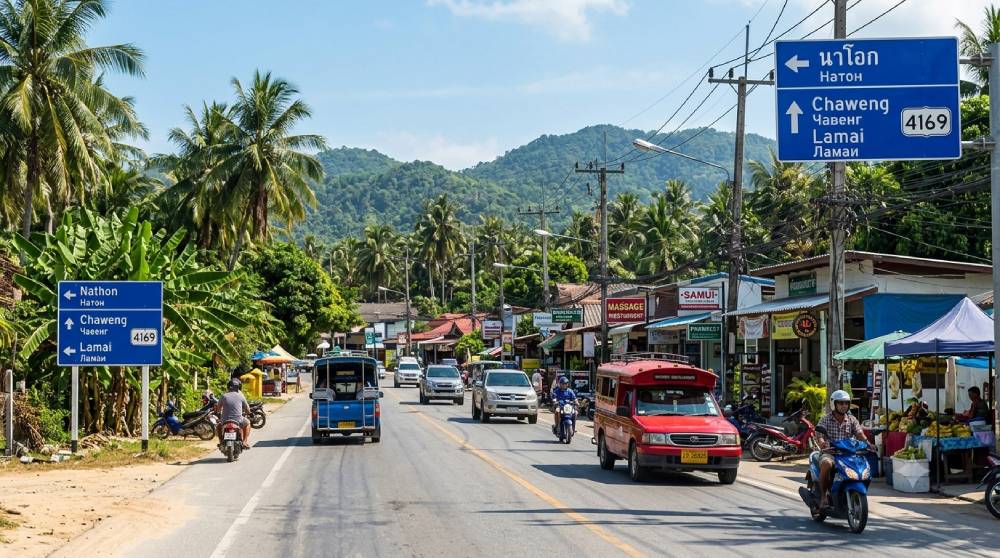
It's smaller than Phuket, but the need for personal transportation is greater. The island covers approximately 227 square kilometers, and the main ring road stretches for 60 kilometers. All the main areas are located on the ring road: Chaweng, Lamai, Bophut, Maenam, Lipanoi, and Nathon. Interesting sights aren't just along the main road. There are waterfalls, temples, observation decks, beaches, and smaller roads inland. Therefore, a car on Koh Samui is a very convenient and necessary accessory.
However, there's a very big downside. Parking on Koh Samui is incredibly difficult. Narrow streets make it impossible to park along the road, and there are no public parking spots, especially near the beaches. The only options are paid parking from local private businesses, which are also few in number, or you have to leave your car in shopping malls and walk several kilometers in the heat. You can waste a lot of time and stress finding a free spot. Taking a taxi simply eliminates this hassle.
How much does a car hire cost in Koh Samui?
In 2026, a small sedan can be found for approximately 600-1,100 baht per day, although actual prices vary by season, model, and rental period, just as in Phuket. Larger cars can cost 1,500-2,500 baht and up. Interestingly, when renting for several days, the cost of a car is quite comparable to several taxi rides per day. Let's say you rent a car for 1 day at 1,000 baht.
You went
- to the beach;
- to a restaurant;
- to the temple;
- to the waterfall;
- in the evening to another area.
Each taxi ride would cost at least 200-300 baht, which could easily be close to or more than the cost of renting a car.
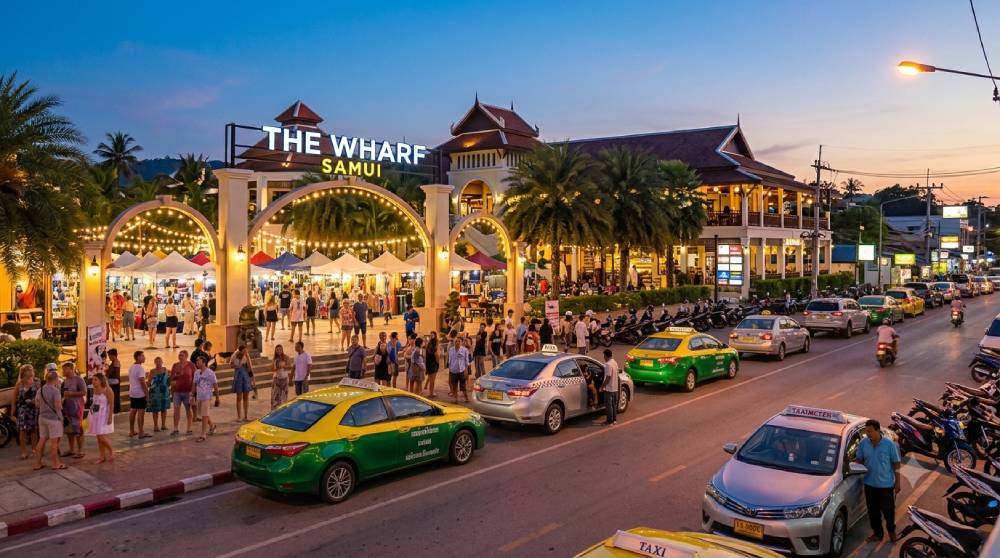
What about taxis on Koh Samui?
There's a nuance to Koh Samui that tourists sometimes discover once they're there. Taxis on Koh Samui are more expensive than in Phuket, even though the distances are much shorter. Grab and In-drive apps also work, but there are fewer drivers. Regular taxis often negotiate a price. A guideline for a short trip might be around 250-350 baht, while a cross-island trip can cost around 700 baht or more. Using an app, the Lamai - Chaweng route (about 20 km) costs 300-350 baht during the day and slightly more in the evening. Taxi drivers will charge at least 500 baht for the same journey. Don't forget about the taxi mafia. They have branches on Koh Samui, too. Therefore, the "we'll take a taxi every day" scheme on Koh Samui can be quite expensive. However, if you have a group of up to four people, you can split the cost equally. However, this option may be inconvenient for families with children.
Is there a public bus in Koh Samui?
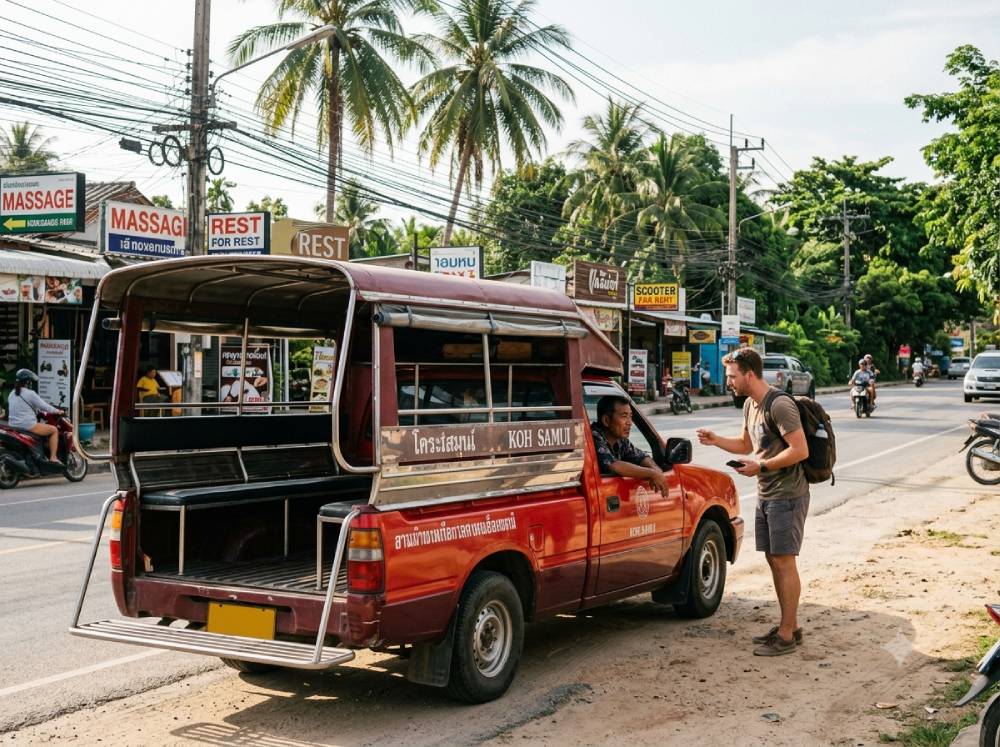
Samui also has something similar to a public bus called a songthaew. These are small pickup trucks with benches in the back. They have a roof but no air conditioning, which can make the ride a nightmare in 30°C heat. During the day, they travel to major destinations and can cost around 50-100 baht per person for a trip between districts. This sounds great, but there's a catch: they're not like city buses with a fixed schedule and price list. If you don't know the fare, the driver will easily inflate it after seeing a confused tourist, and you'll end up paying twice as much as a local. And the wait for the bus and the ride itself can be very time-consuming. After dark, when drivers finish their workday, they start offering private transfers at standard taxi prices. For a budget trip during the day, songthaews are a good option if you're not in a rush, but basing your entire vacation on them isn't always practical.
So where is the best place to rent a car?
Let's imagine an ordinary tourist.
You came as a couple for 7 days and want to see the island.
Option 1 - taxi only
Let's say you take an average of three short trips a day for 300 baht each. That's about 900 baht per day. Over a week, that's 6,300 baht. And that doesn't include expensive long-distance trips across the island or in the evening.
Option 2 - hire a car
A car rental for 7 days will cost approximately 4,000-8,000 baht, depending on the model, season, and rental terms. Plus gas. Plus a deposit, but it's refundable. So, it's the more affordable option for active travelers. And most importantly, you get the freedom to go wherever and whenever you want.
And when is a car not needed at all?
If you are staying for less than a week and are planning to:
- live near the beach and don’t look at others;
- walk around the area;
- go to a restaurant a couple of times;
- go on an excursion once;
- spend most of your time on the hotel grounds,
Then renting a car in Phuket simply doesn't make sense. A couple of taxi rides won't break the bank.
Where is it easier to live without your own transport?
In terms of simplicity, Phuket is more convenient for taxi travel. The reason is simple: the tourist infrastructure is more extensive here, and Grab and other services are widely used throughout the island. There are also buses.
Taxis also operate on Koh Samui, but the selection of cars can be limited, and trips between districts are significantly more expensive. Therefore, Koh Samui is a case where having your own car can often make life much easier.
What is important to know
- Driver license
If you plan to rent a car in Koh Samui or Phuket, take care of your documents in advance. To drive in Thailand, you must have an International Driving Permit or a local Thai driver's license. In Phuket, document checks for tourists have been particularly tightened since 2026.
- Remember that in Thailand, traffic drives on the left and the steering wheel is on the right. If you've never driven on the left, the first few hours or days may feel unusual.
- Traffic on local roads is very chaotic. Drivers cut you off, drive into oncoming traffic, and overtake. There are many scooters, which come from all directions and create dangerous situations.
Let's sum it up
Let's simplify it to a few life situations:
- Are you traveling as a couple or with a small group for 4-5 days and just want to relax by the sea? A taxi is your option. A car might definitely be unnecessary.
- Are you planning a 7-14 day vacation and plan to spend all day driving and exploring the island? Renting a car already seems much more interesting and affordable.
- Traveling with a family and a child? A car is definitely more comfortable and safer: it has air conditioning, a child seat, a private trunk for storing children's belongings, and you don't have to wait for a car every time.
- Don't like or are afraid of driving in a foreign country and want a worry-free vacation? A taxi is ideal.
In short, if you plan to drive a lot every day, it will be inconvenient and expensive without your own car, especially on Koh Samui.
A useful life hack
It's best not to choose between "car only" and "taxi only." The most convenient option is to combine both. For example, in Phuket, rent a car for 3-5 days, see everything you want, and then use taxis for short distances for the rest of your vacation.
On Koh Samui, you can do the opposite: if you plan to actively explore the island, rent a car for almost your entire vacation. If you live near Chaweng or Bophut and don't plan on traveling far, you can easily get by with taxis and songthaews.
Another one useful life hack: check several taxi apps before each trip. The price for the same route can vary greatly. Grab is often more expensive, both on Koh Samui and in Phuket. However, it does have an official stand at Phuket Airport, making it much easier to find a car immediately upon arrival. Remember that the taxi mafia doesn't allow private drivers onto its premises. And if you choose a taxi through an app, you'll have to leave the airport. Not the most pleasant experience after a long flight. But it might save you a couple hundred baht.
To put it in very simple terms:
Phuket is a large, bustling, and heavily trafficked resort. It's perfectly possible to live here without a car, especially if you live in a convenient tourist area. However, if you're planning on driving a lot, a rental car pays for itself well over the number of trips you'll need.
Samui is quieter and more compact, but public transportation is limited and taxis are expensive, so a car is often indispensable for active vacations. However, don't forget about parking.
As you've probably already realized, there's no one-size-fits-all answer to Thailand's needs. Everything depends on your plans, travel budget, and comfort level.