In Thailand, driving is on the left side of the road, and cars are right-hand drive. For drivers from Europe and the CIS, the first few hours behind the wheel can be stressful. But the good news is that adaptation happens much faster than expected—usually within 1-2 days. If you're planning to rent a car in Thailand or have already booked one, you've likely wondered how difficult it is to drive on local roads and how quickly you can get used to driving on the left side of the road. For most tourists, this is unusual, and many of them refuse to rent a car out of fear of failure, or, after getting behind the wheel and driving for a while, realize they're uncomfortable and return the car. This is a purely individual matter, but in practice, adaptation often takes anywhere from a few hours to several days, depending on the driver's experience. Furthermore, many drivers report that after just a few trips, they even feel calmer than at home, thanks to the measured driving style and constant traffic flow.
We've created a short and practical guide for you that will help you feel confident and quickly get used to driving a right-hand drive car in left-hand traffic.
How to quickly get used to driving on the left in Thailand
Here are some helpful tips that will ensure you'll be driving in the land of smiles without fear.
The main rule is to keep to the left side of the road, and the steering wheel in the car will always be on the right.
A simple tip: the driver is always closer to the center of the road. If you see from the window that you're driving along the sidewalk, change lanes immediately.
How to restructure your thinking
1. Say it before you start. Before each drive, mentally repeat, "I drive on the left." Or make a reminder and hang it on the steering wheel or somewhere visible, but don't let it distract you. This helps avoid automatic mistakes and get used to it faster, especially if you've just rented a car in Thailand.
2. An important tip: start with simple routes. After completing the car rental process, don't rush to drive on busy roads, especially if you're vacationing in Bangkok or Phuket. Even though Phuket is an island, traffic is heavy and speeds are high. It's better to practice on quieter roads. Initially, only drive short distances, practicing in courtyards and on small roads with moderate traffic.
3. Follow the flow of traffic. Just stay behind the car in front, and you'll automatically be in the correct lane.
4. Avoid driving at night and in bad weather during the first few days. It's harder to navigate in the dark and there's a higher risk of making mistakes.
5. Take breaks. If you feel tense, stop, get out of the car, and refocus. This is a normal part of adaptation.
What to do at turns and intersections
The left turn is simple and “short” (like a right turn in countries with right-hand traffic).
The right turn is more difficult, you need to cross the oncoming traffic.
At intersections, proceed carefully and slowly. If you're unsure, it's best to let other traffic pass first by flashing your high beams.
Overtaking is permitted on the right.
Tip: Before turning, say the words "I'm entering the left lane."
This will help you get into the right mindset for the desired route.
Roundabout Circulation
At a roundabout, those already moving have priority. Entry is on the left, and traffic flows clockwise.
Common mistakes made by beginners:
Driving into the right lane "out of habit".
The turn signals are not used correctly, as they are mirrored. Most people, out of habit, turn on the windshield wipers instead.
Confusion in parking lots and gas stations.
Sharp restructuring.
Life hacks for quick adaptation
Place a note on the panel: "KEEP LEFT".
Use the navigator with voice prompts.
For the first few hours, keep both hands on the steering wheel and try not to get distracted.
How quickly do you get used to driving on the left in Thailand?
Experienced drivers with extensive driving experience rewire their brains to drive on the left side of the road within an hour or two. For beginners, it may take several days.
Driving on the left side of the road isn't a reason to avoid driving. On the contrary, car rental in Thailand gives you freedom of movement and the opportunity to see much more than you would by taxi or public transport. It's a matter of getting used to. If you approach the process calmly and gradually, getting used to it will be quick and stress-free. The key is to take your time, be attentive, and keep your first few trips as simple and short as possible. Within a couple of days, you'll feel confident and enjoy driving. If this is your first time renting a car in the Land of Smiles, pay special attention to your first few hours behind the wheel—that's when most mistakes happen.
Road conditions and driving style
Thailand is a country with a unique road culture that is very different from the European style.
First and foremost, scooters (motorbikes). They are full-fledged road users, and there are a lot of them. They drive erratically, can drive in oncoming traffic, and often fail to use their turn signals or, conversely, fail to turn them off after completing a maneuver, which can confuse other road users. Before turning, always keep in mind that there may be a motorbike to your side. They often end up in your blind spot. Modern cars are equipped with motion sensors in the mirrors, which will be a great help when you first start driving and throughout your entire trip.
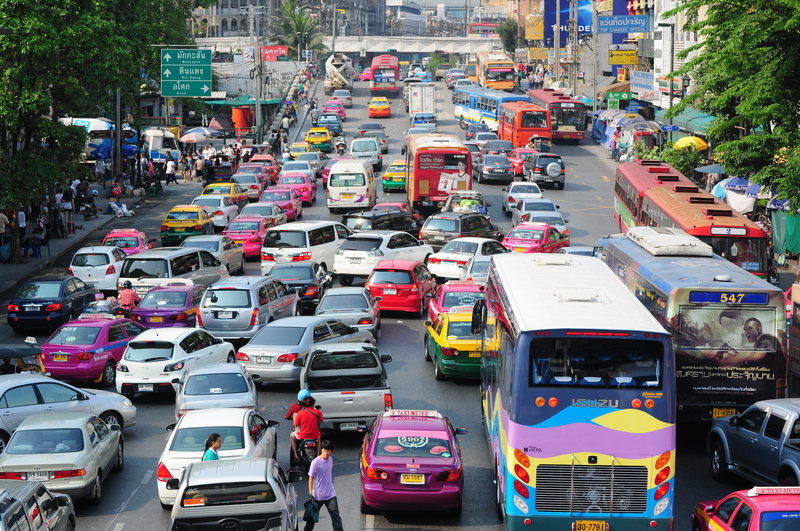
Drivers may also fail to use turn signals and headlights at night, driving into oncoming traffic, and constantly attempting to overtake.
If you rent a car, be prepared for a slightly different driving style in Thailand , requiring a more flexible driving style. Traffic will feel chaotic at first, but everyone will gradually adapt.
Parking and gas stations
Another thing you need to get used to is that parking lots and gas stations, like all other infrastructure in the country, are designed for left-hand traffic. Pay attention to the signs for entry and exit—either arrows pointing in the direction of travel or the words "entrance/exit, in/out"—to ensure you don't make a mistake. If there are no signs, just remember that the entry is always the first turn you take.
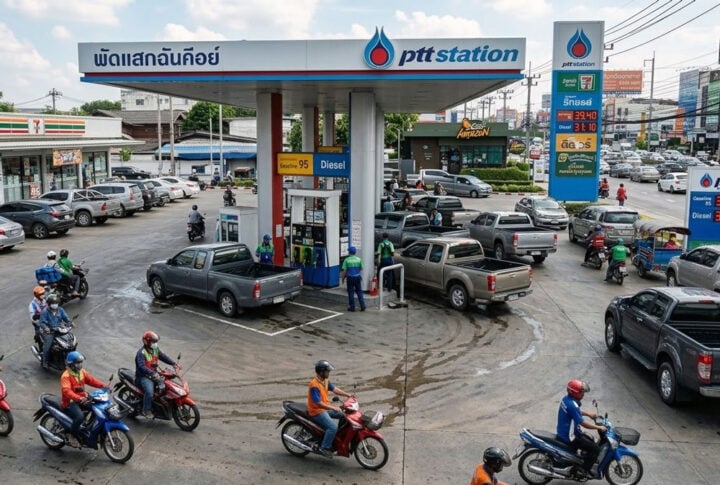
Approaching gas stations can feel unusual. Most cars have gas caps on the left, which is the direction you'll be entering the station. When approaching the pump, you should position it on the left side of the car, on the passenger side.
Is it worth renting a car in Thailand?
Renting a car is both reasonable and necessary if you plan frequent trips and have a lot of luggage, have a large family or children, choose remote, hard-to-reach destinations where taxis or buses can't go, and value comfort and independence. If you're traveling through cities without public transportation and taxis are very expensive, such as Phuket and Koh Samui, you can't do without a personal vehicle. Car rental in Phuket will not only enhance your vacation experience but also ensure your safety and save you money. You can independently travel off the island to neighboring provinces to see the sights there, rather than limiting yourself to Phuket. In these scenarios, renting a car in Thailand gives you more control and often saves time and money. Of course, only use a rental car if you're completely confident in your abilities. Don't ruin your vacation with accidents and unexpected expenses.